Why Embedded Systems is One of the Best Career Choices in 2026
Complete Career Guide for Students, Freshers & Electronics Professionals
The technology landscape is evolving faster than ever before. From smart homes and wearable devices to electric vehicles, industrial automation, robotics, and Artificial Intelligence (AI), embedded systems are the foundation of modern electronic products. Every smart device that we use in our daily lives relies on embedded technology to function efficiently and intelligently.
If you are wondering whether Embedded Systems is a good career in 2026, the answer is yes. The increasing adoption of automation, connected devices, and intelligent electronics has created an enormous demand for skilled Embedded Systems Engineers across the globe.
Whether you are a Diploma student, BE/BTech student, engineering graduate, or working professional looking to upskill, Embedded Systems offers excellent career opportunities, competitive salaries, and long-term growth.
In this article, we will explore why Embedded Systems is one of the most promising career choices in 2026, the industries hiring embedded engineers, salary trends, required skills, and how professional training can help you build a successful career.
What is Embedded Systems?
An Embedded System is a specialized computer system designed to perform dedicated functions within a larger electronic device. Unlike general-purpose computers, embedded systems are optimized for specific applications, offering high reliability, efficiency, and real-time performance.
Embedded systems combine hardware and software to control devices such as:
-
Smart TVs
-
Washing Machines
-
Microwave Ovens
-
Air Conditioners
-
Medical Equipment
-
Smart Watches
-
CCTV Systems
-
Automotive Electronics
-
Industrial Automation Systems
-
Drones
-
Robotics
-
IoT Devices
-
Smart Home Appliances
Because embedded systems are used in almost every electronic product, skilled engineers are in demand across numerous industries.
Why Embedded Systems is a High-Demand Career in 2026
The demand for Embedded Systems Engineers is growing rapidly due to technological advancements and increasing digital transformation.
Several factors contribute to this growth:
-
Rising adoption of IoT devices
-
Expansion of Electric Vehicles (EV)
-
Growth in Industrial Automation
-
Increasing use of AI-powered devices
-
Development of Smart Cities
-
Growth of Robotics
-
Expansion of Medical Electronics
-
Consumer Electronics Innovation
-
Semiconductor Industry Growth
As companies continue developing smarter products, the need for engineers capable of designing, programming, and testing embedded systems will continue to rise.
Market Demand for Embedded Systems Engineers
Embedded Systems is no longer limited to traditional electronics companies. Today, organizations across multiple industries require embedded engineers to develop innovative products and intelligent solutions.
Industries actively hiring Embedded Systems professionals include:
-
Electronics Manufacturing
-
Automotive Industry
-
Electric Vehicle Manufacturers
-
Industrial Automation Companies
-
Medical Device Companies
-
Aerospace & Defense
-
Robotics Companies
-
Consumer Electronics
-
Telecommunications
-
Semiconductor Companies
-
Smart Energy Solutions
-
Internet of Things (IoT) Companies
The expansion of these industries has created thousands of career opportunities for skilled professionals.
Embedded Systems in Automotive Electronics
Modern vehicles contain dozens of embedded systems that control critical functions and improve safety, comfort, and efficiency.
Examples include:
-
Engine Control Units (ECU)
-
Anti-lock Braking Systems (ABS)
-
Airbag Controllers
-
Infotainment Systems
-
Climate Control
-
Navigation Systems
-
Adaptive Cruise Control
-
Advanced Driver Assistance Systems (ADAS)
With automotive technology becoming increasingly software-driven, Embedded Systems Engineers are essential to the future of transportation.
Growing Opportunities in the Electric Vehicle (EV) Industry
The rapid growth of Electric Vehicles has significantly increased the demand for embedded engineers.
Embedded systems are used in:
-
Battery Management Systems (BMS)
-
Motor Controllers
-
Charging Systems
-
Vehicle Monitoring
-
Power Electronics
-
Energy Management
-
Dashboard Displays
-
Smart Charging Infrastructure
As governments and manufacturers invest in sustainable mobility, career opportunities in EV technology continue to expand.
Embedded Systems in Medical Electronics
Healthcare technology depends heavily on embedded systems for accurate monitoring and patient safety.
Applications include:
-
ECG Machines
-
Blood Pressure Monitors
-
Ventilators
-
Patient Monitoring Systems
-
Infusion Pumps
-
Medical Imaging Equipment
-
Wearable Health Devices
Medical electronics require highly reliable embedded software, making this sector an attractive career option.
Internet of Things (IoT) is Driving Massive Growth
IoT connects everyday devices to the internet, enabling communication, automation, and remote monitoring.
Common IoT applications include:
-
Smart Homes
-
Smart Agriculture
-
Smart Cities
-
Industrial IoT
-
Smart Energy
-
Environmental Monitoring
-
Healthcare Monitoring
-
Connected Vehicles
Embedded Systems Engineers play a key role in developing IoT hardware and integrating sensors, communication modules, and cloud connectivity.
Robotics and Automation
Automation is transforming manufacturing, logistics, healthcare, and service industries.
Embedded systems are used in:
-
Industrial Robots
-
Automated Production Lines
-
Warehouse Automation
-
Agricultural Robots
-
Medical Robots
-
Educational Robots
-
Autonomous Mobile Robots
As industries continue automating operations, embedded engineers remain at the center of innovation.
Artificial Intelligence (AI) Devices
Artificial Intelligence is increasingly being integrated into embedded devices.
Examples include:
-
Smart Cameras
-
Face Recognition Systems
-
Voice Assistants
-
Intelligent Home Appliances
-
Smart Security Systems
-
AI-enabled Medical Equipment
-
Autonomous Vehicles
The combination of AI and Embedded Systems creates exciting opportunities for future engineers.
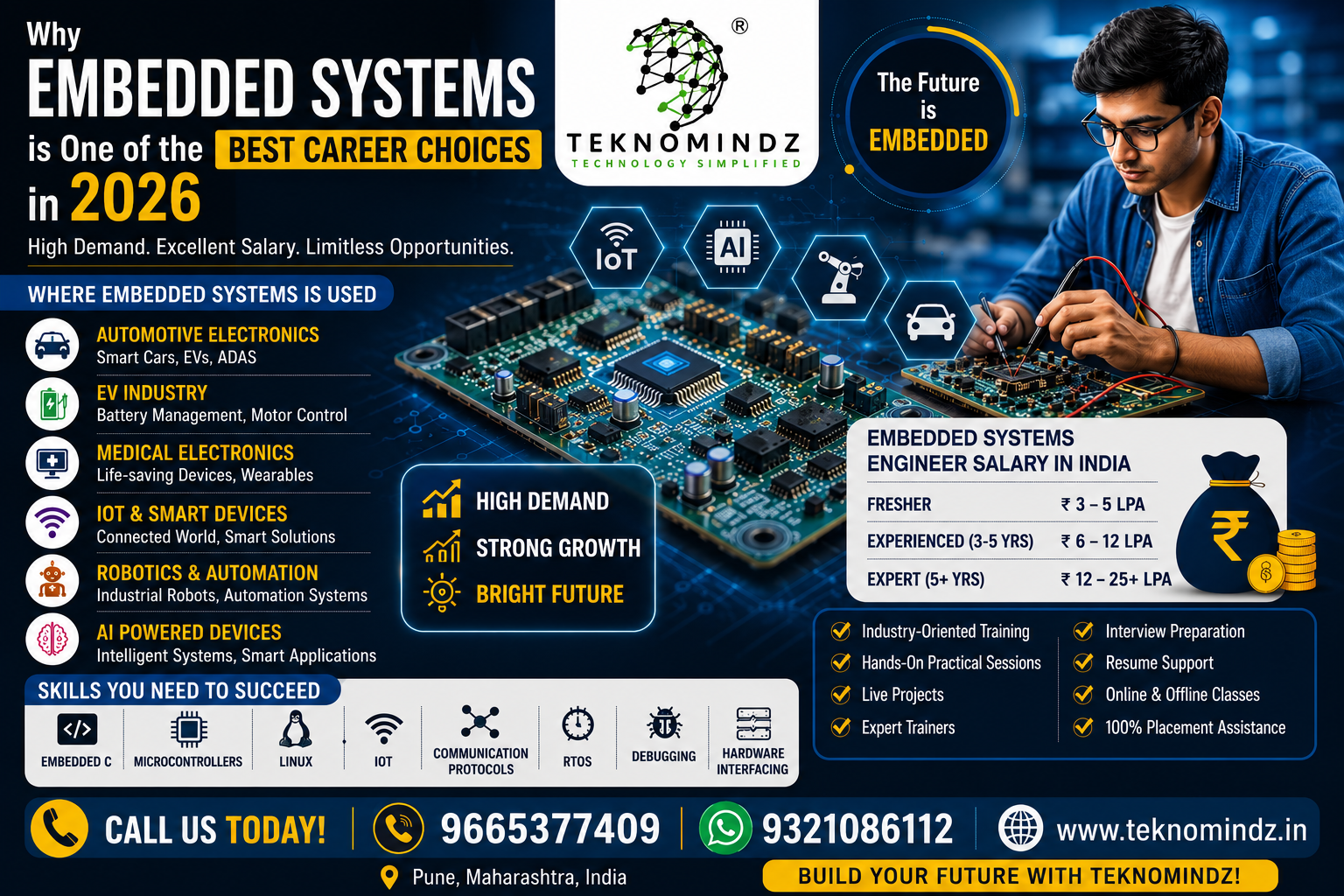
Embedded Systems Engineer Salary in India
One of the major advantages of choosing Embedded Systems is its excellent long-term earning potential.
Salary depends on:
-
Technical Skills
-
Practical Experience
-
Project Knowledge
-
Company
-
Location
-
Certifications
Professionals who possess hands-on experience with embedded programming, Linux, IoT, communication protocols, and debugging are often preferred by employers.
As engineers gain experience, they can progress into senior technical roles, solution architecture, product development, and engineering management.
Skills Required to Become an Embedded Systems Engineer
To build a successful career, students should develop both technical and problem-solving skills.
Important technical skills include:
-
Embedded Programming
-
Embedded C
-
Microcontroller Programming
-
Linux Fundamentals
-
Shell Scripting
-
Communication Protocols (UART, SPI, I²C, CAN)
-
Hardware Interfacing
-
Debugging Techniques
-
RTOS Concepts
-
IoT Fundamentals
-
Sensor Interfacing
-
PCB Basics
-
System Testing
Soft skills such as analytical thinking, teamwork, communication, and continuous learning are equally valuable.
Career Opportunities After Embedded Systems Training
Students completing professional Embedded Systems training can explore roles such as:
-
Embedded Systems Engineer
-
Embedded Software Engineer
-
Firmware Engineer
-
Embedded Linux Engineer
-
IoT Developer
-
Hardware Design Engineer
-
Product Development Engineer
-
Electronics Design Engineer
-
Validation Engineer
-
Testing Engineer
-
Technical Support Engineer
-
R&D Engineer
These roles are available in startups, multinational corporations, research organizations, and product development companies.
Why Practical Training is Important
Many graduates have theoretical knowledge but lack practical exposure.
Industry-oriented training helps students:
-
Understand real engineering workflows
-
Improve hardware debugging skills
-
Gain project experience
-
Build confidence
-
Prepare for technical interviews
-
Become job-ready
Practical learning significantly improves employability and career growth.
Why Choose Teknomindz Institute of Advance Technology?
Teknomindz Institute of Advance Technology offers industry-oriented Embedded Systems training designed to prepare students for real-world engineering careers.
Key Highlights
-
Industry-Oriented Curriculum
-
Hands-On Practical Sessions
-
Live Projects
-
Experienced Industry Trainers
-
Linux & IoT Training
-
Interview Preparation
-
Resume Building Support
-
Mock Interviews
-
Online & Offline Classes
-
Weekend Batches
-
Placement Assistance
Our training focuses on developing practical skills that employers value, enabling students to confidently begin their careers in Embedded Systems.
Frequently Asked Questions (FAQs)
Is Embedded Systems a good career in 2026?
Yes. Embedded Systems is one of the fastest-growing engineering domains due to increasing demand in IoT, EVs, robotics, medical electronics, and industrial automation.
Who can join an Embedded Systems course?
Diploma students, BE/BTech students, engineering graduates, electronics professionals, and anyone interested in embedded technology.
Does Embedded Systems have good job opportunities?
Yes. Electronics manufacturing, automotive, IoT, robotics, healthcare, aerospace, and semiconductor industries continuously hire Embedded Systems Engineers.
What skills should I learn for Embedded Systems?
Programming, Linux, communication protocols, hardware interfacing, debugging, IoT, and RTOS concepts are among the most valuable skills.
Is practical training important?
Absolutely. Hands-on projects and real-world experience significantly improve technical knowledge and interview confidence.
Final Thoughts
Embedded Systems continues to be one of the strongest career options for electronics and engineering students in 2026. With rapid advancements in IoT, Electric Vehicles, Artificial Intelligence, Robotics, and Industrial Automation, the need for skilled Embedded Systems Engineers is expected to grow steadily.
Building a successful career requires more than theoretical knowledge. Practical training, industry-oriented projects, continuous learning, and strong technical fundamentals are essential for long-term success.
If you are looking to start or advance your career, choosing the right training institute can make a significant difference. Teknomindz Institute of Advance Technology provides practical Embedded Systems training that helps students gain the confidence, technical expertise, and industry exposure required to succeed in today's competitive engineering environment.