.webp)

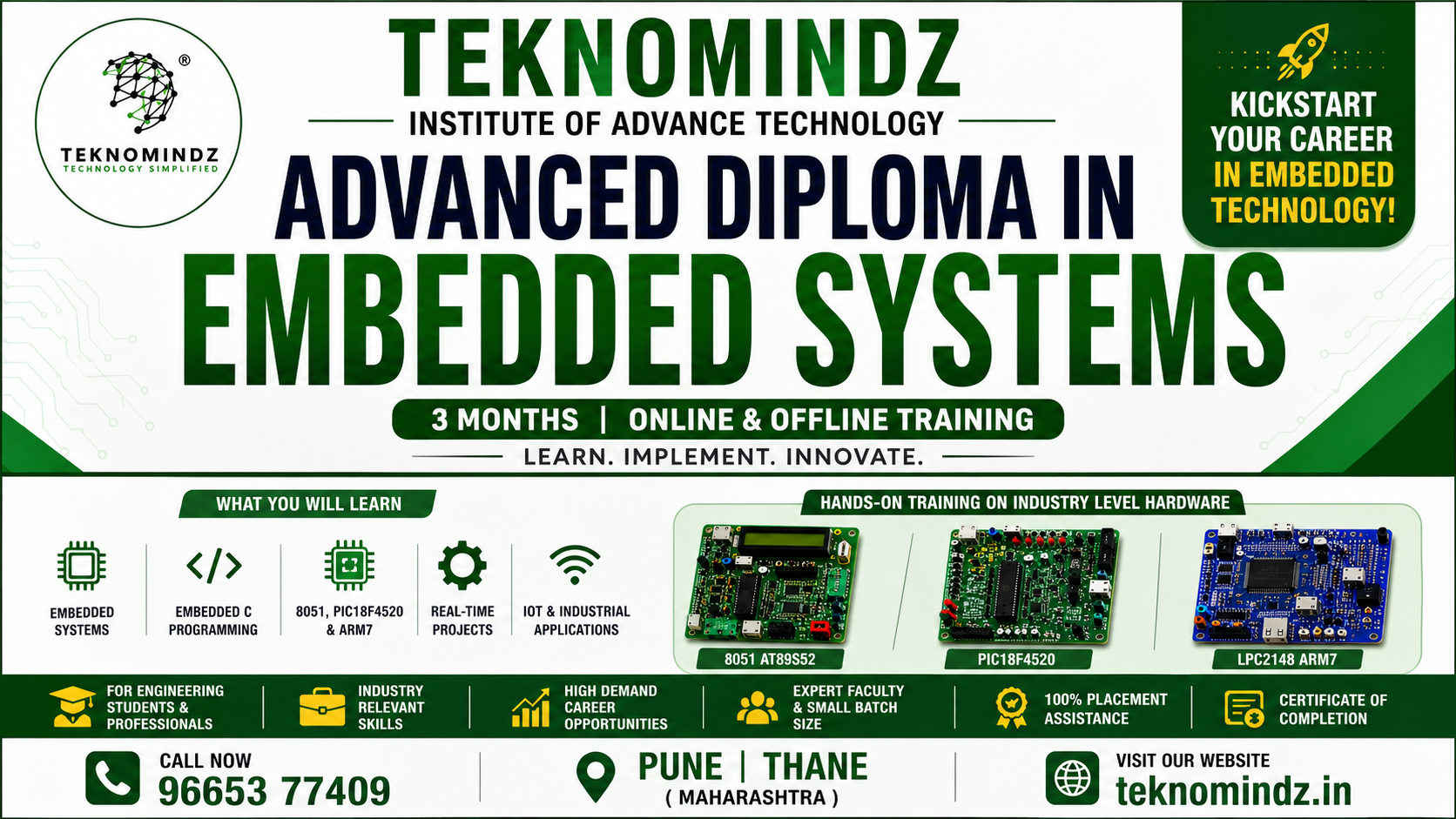
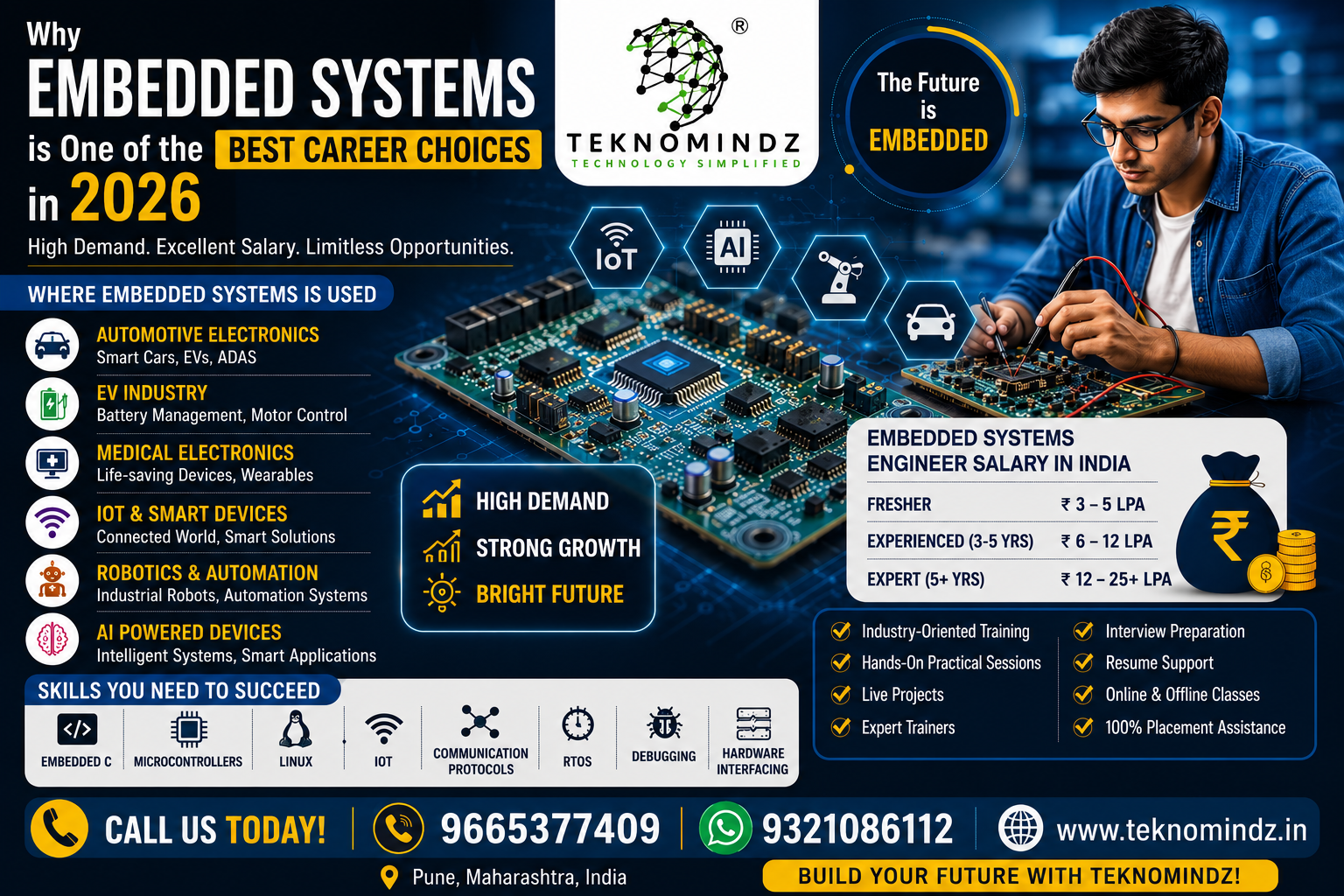
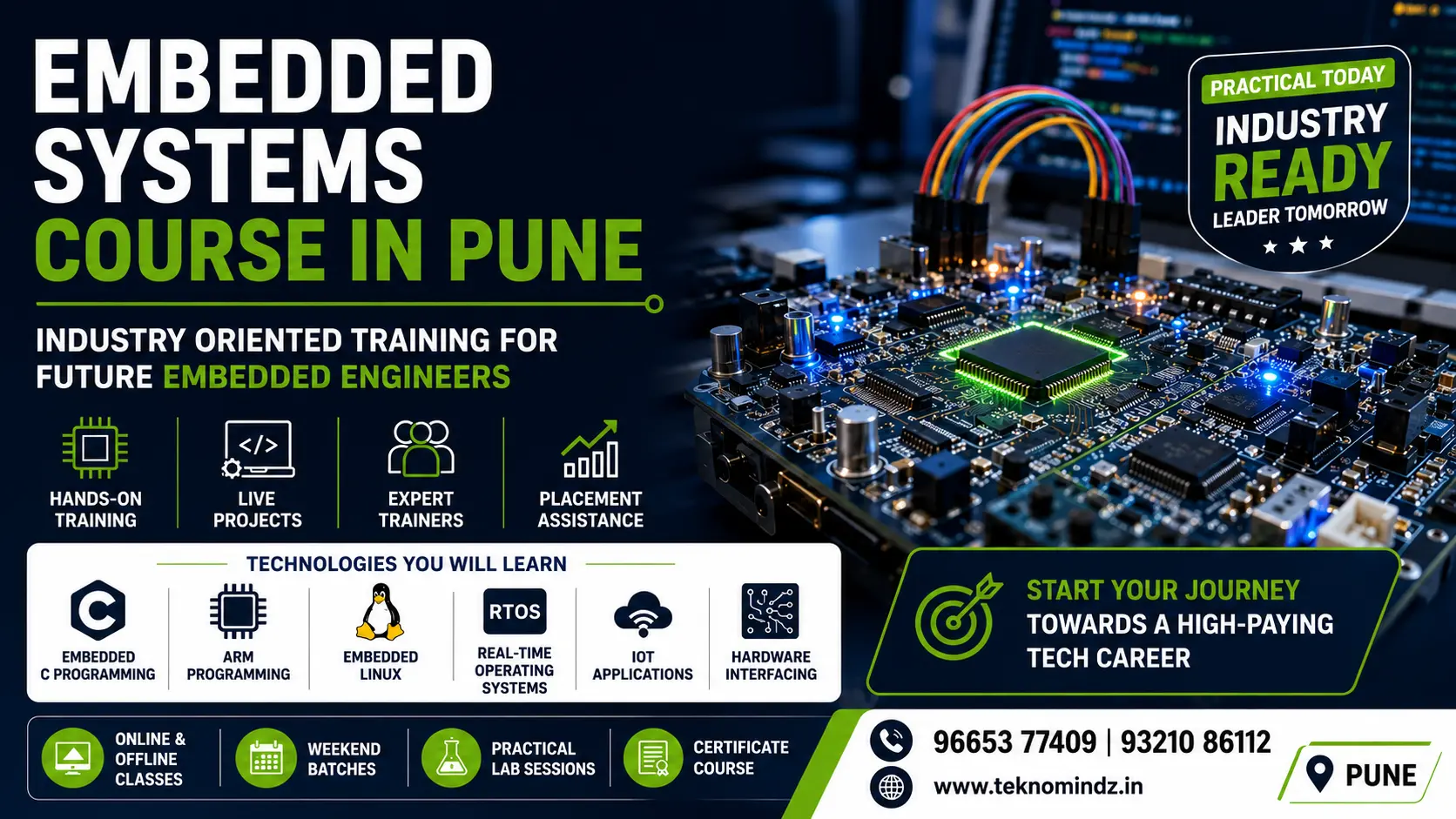
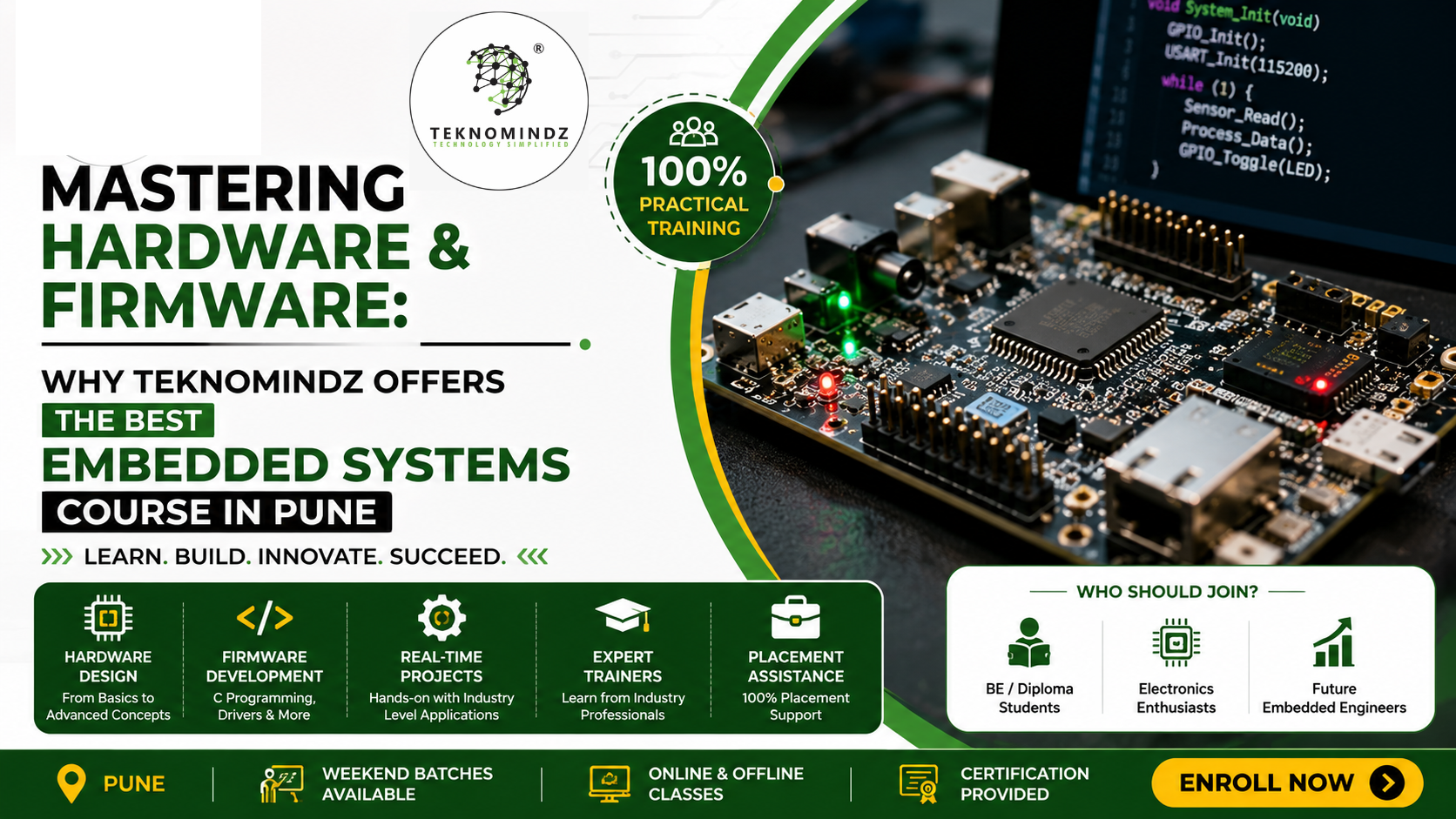
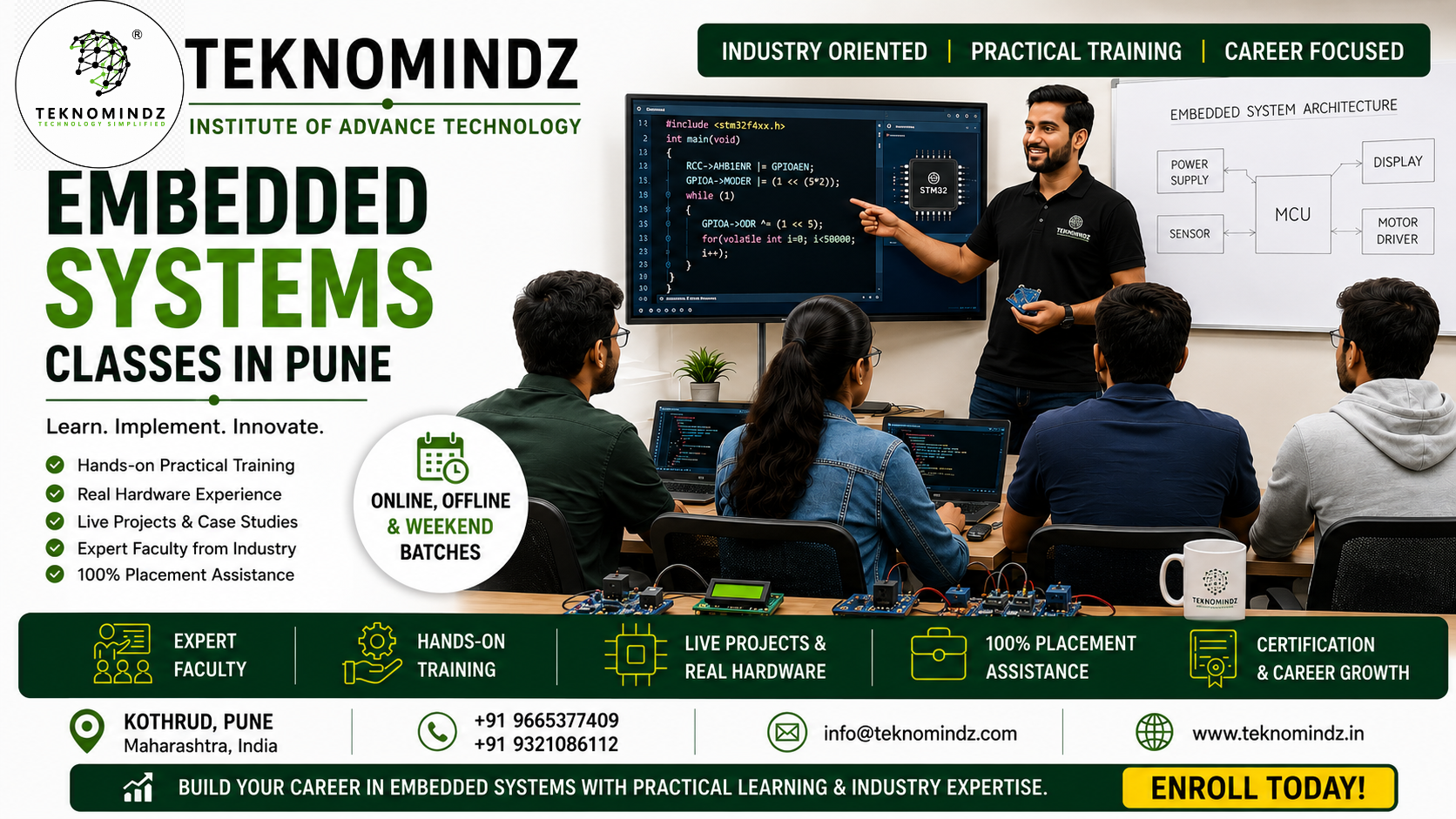
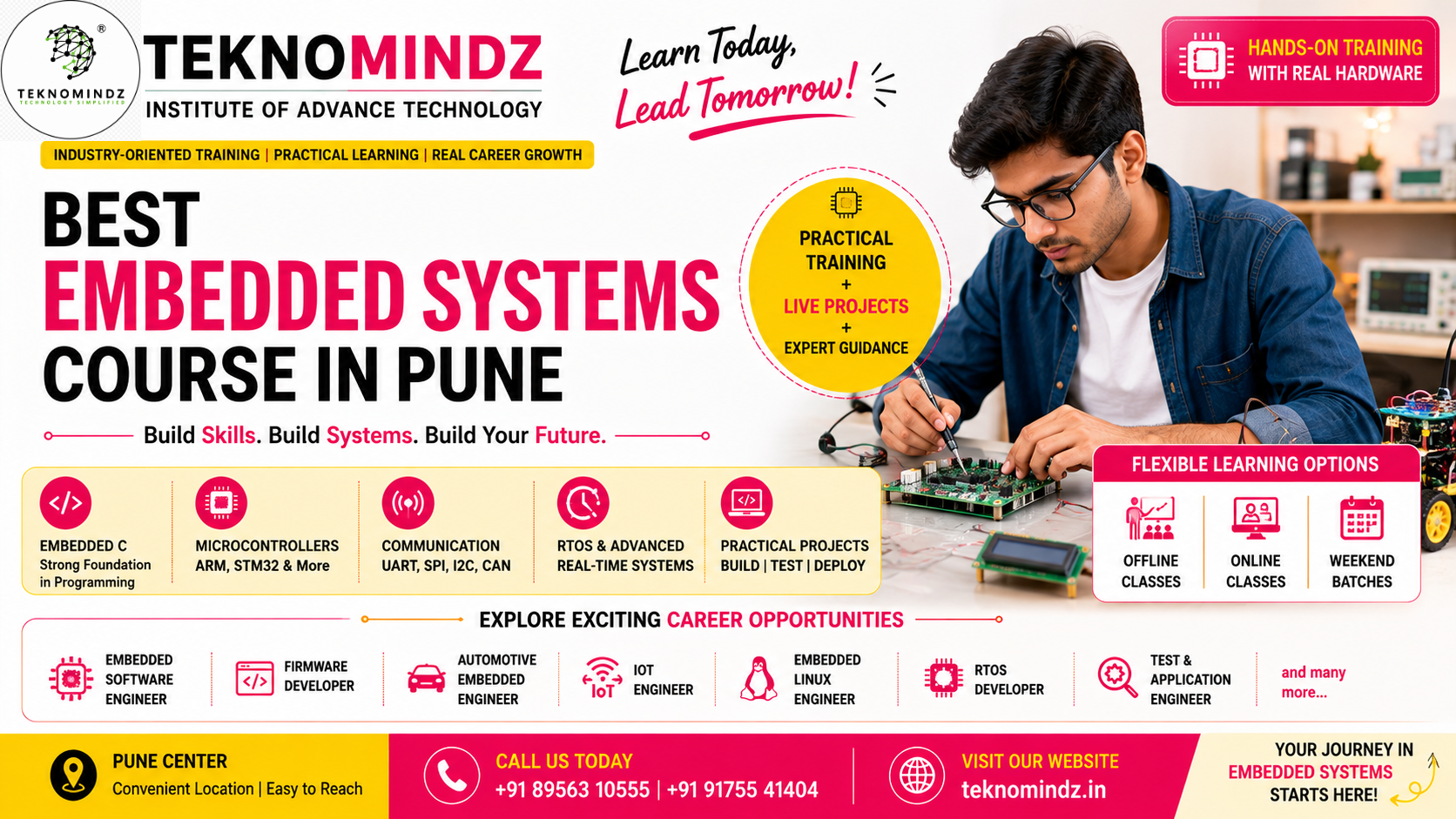
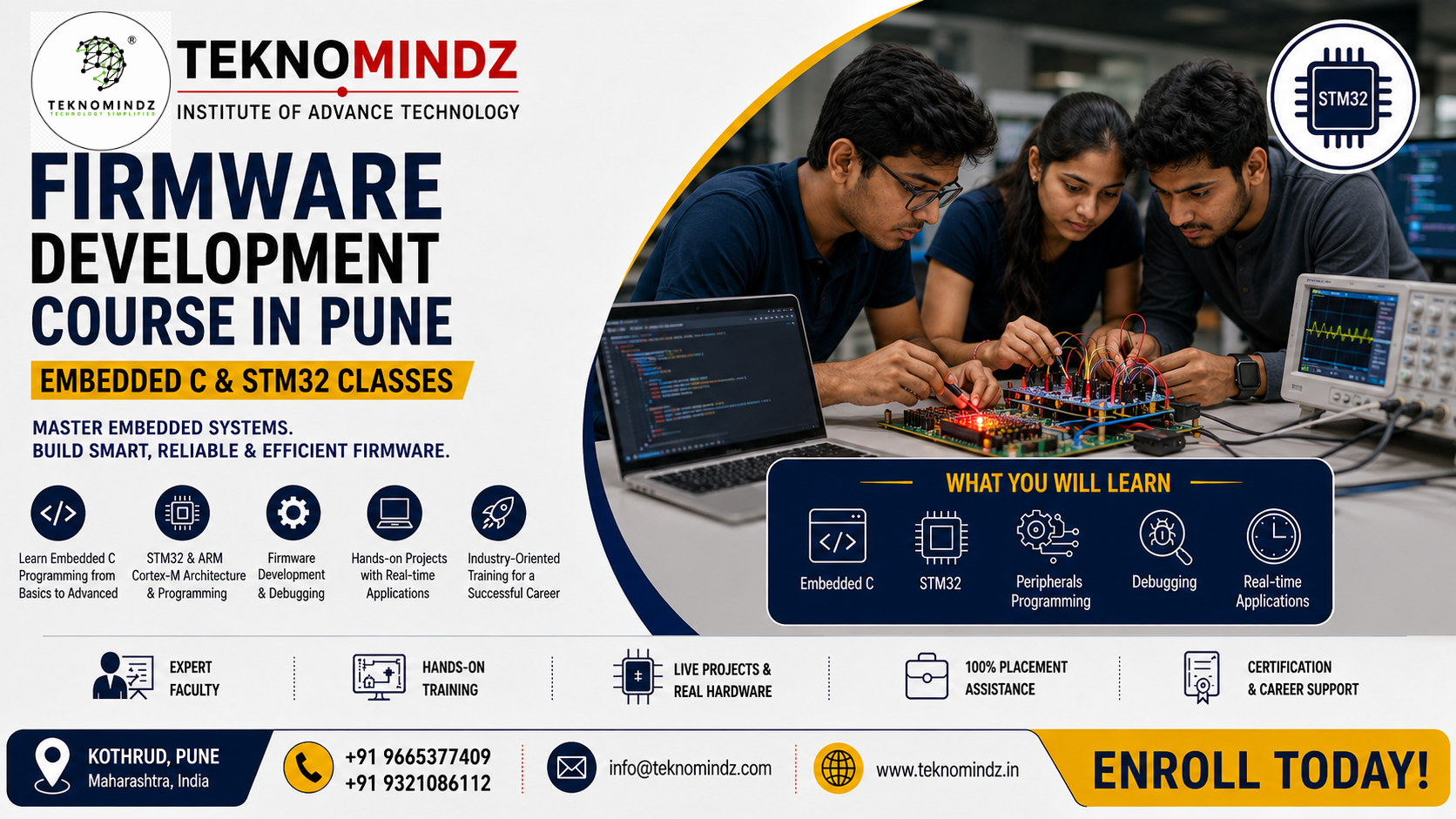
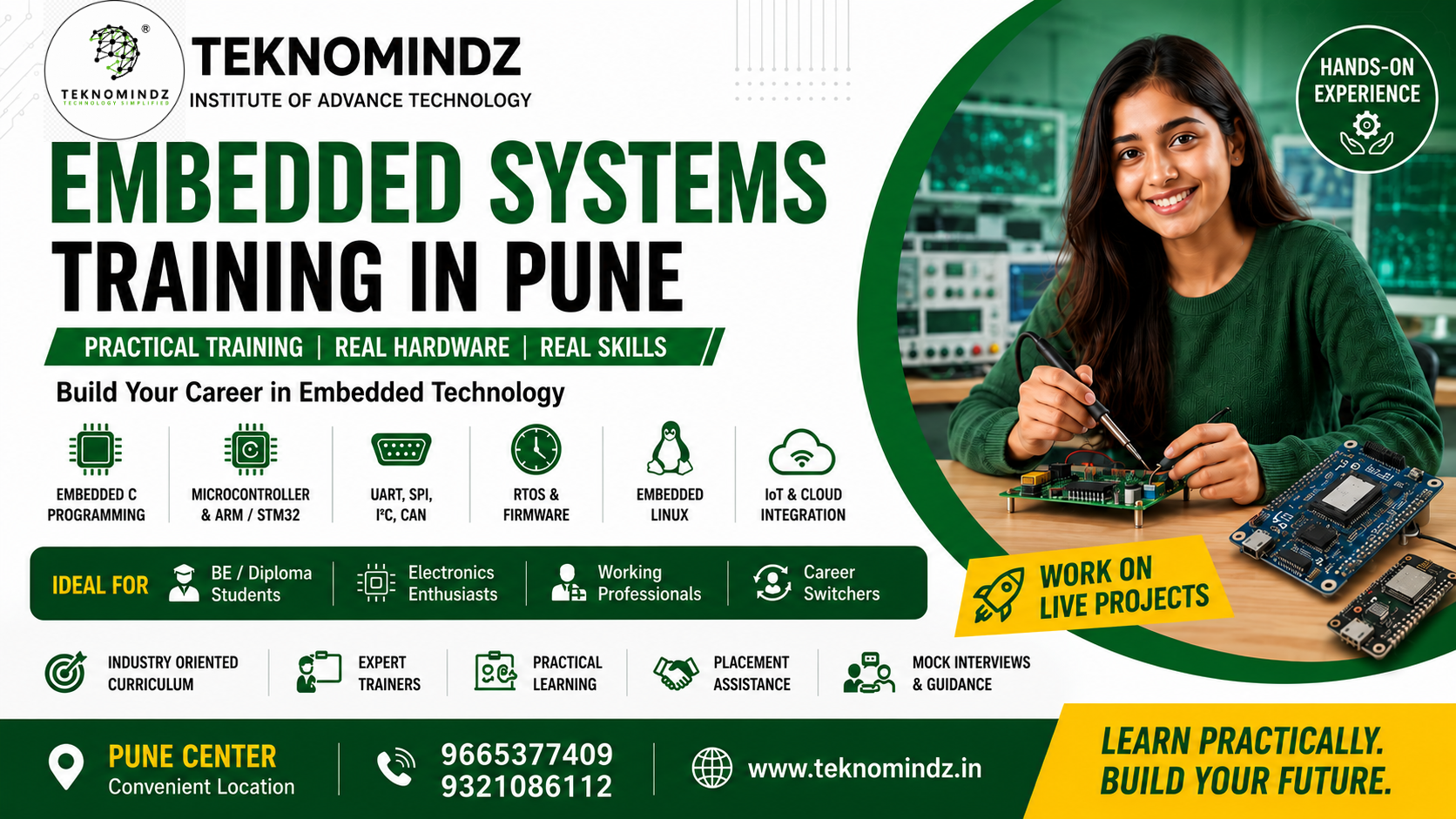
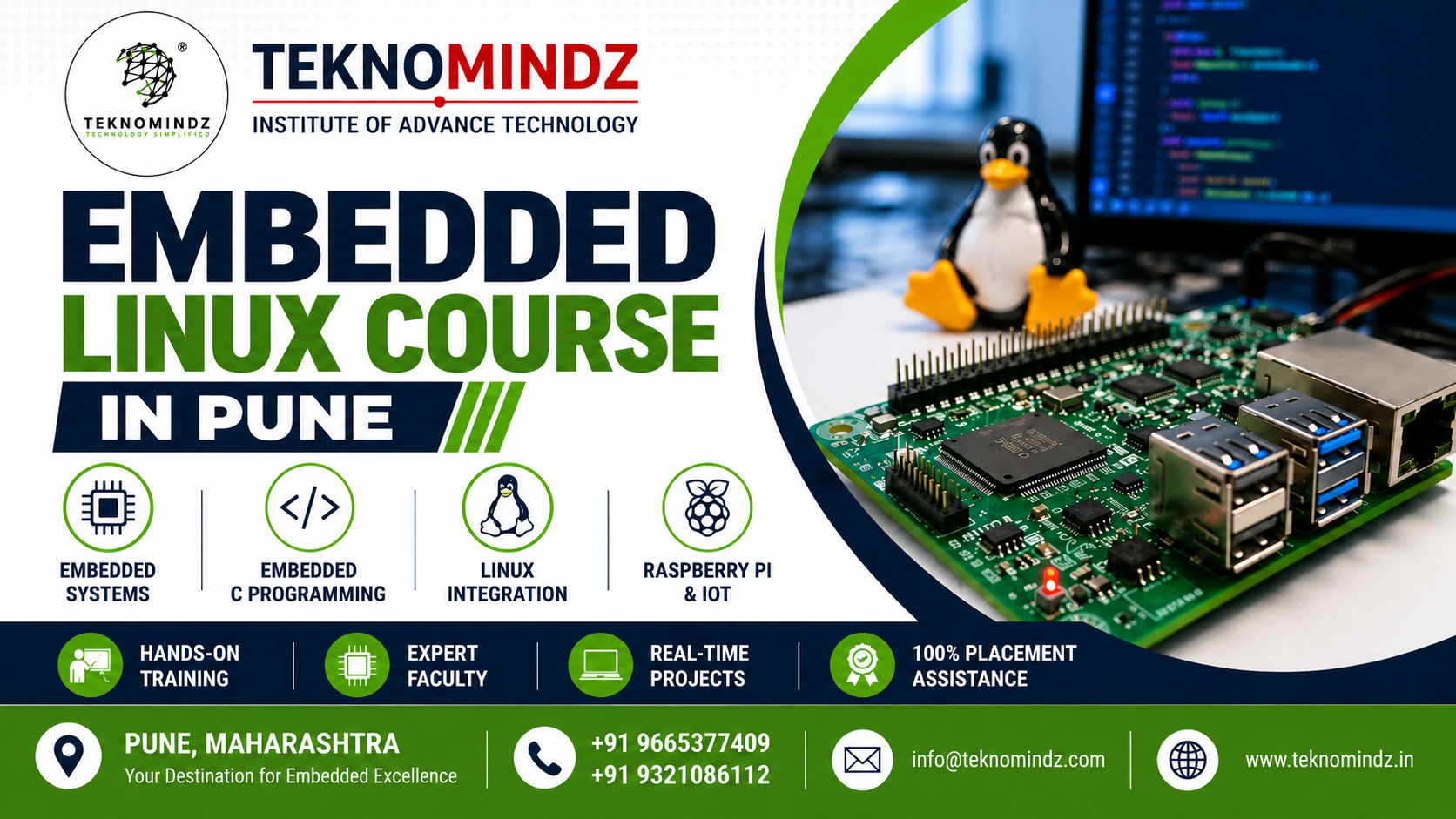
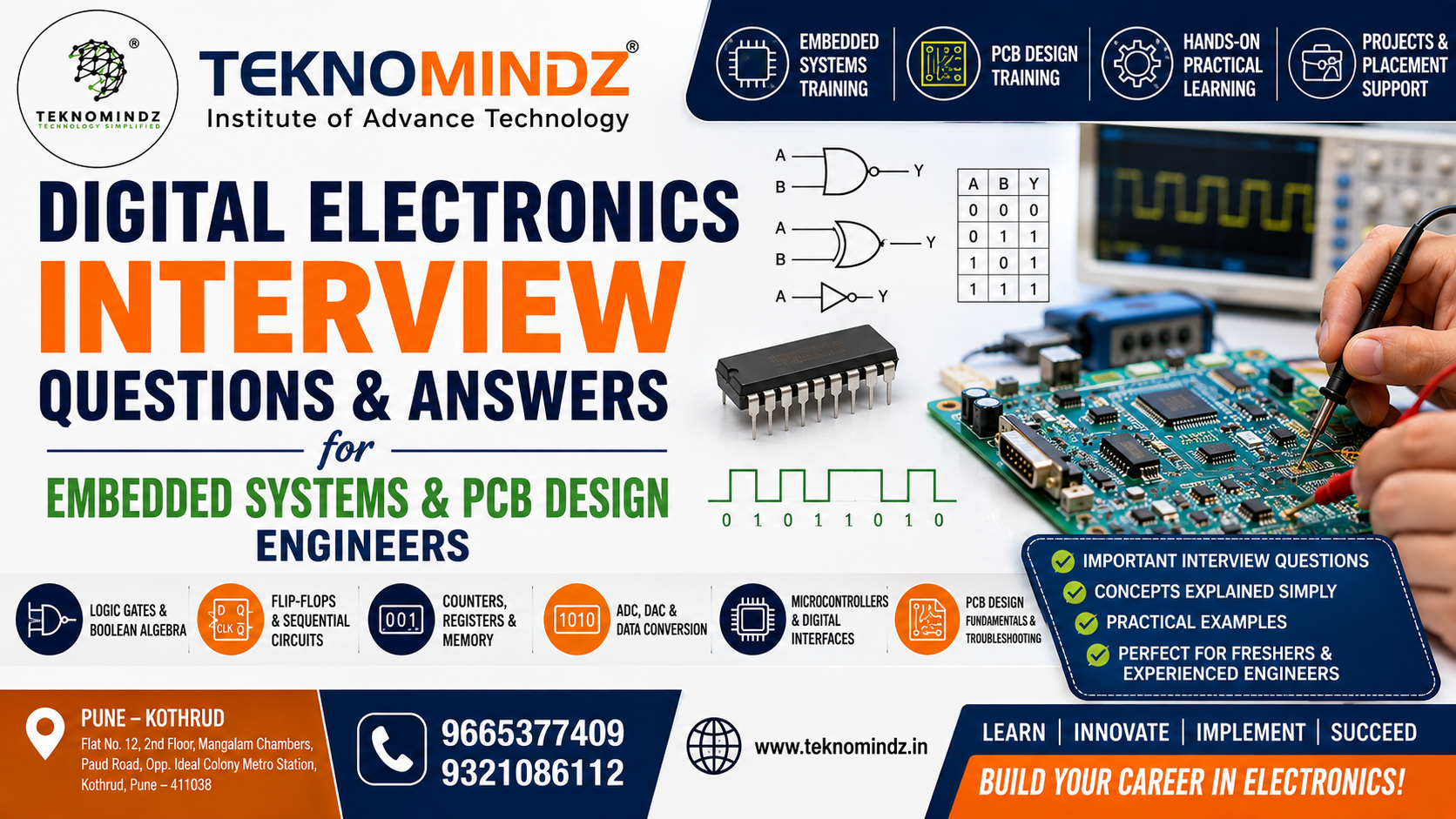
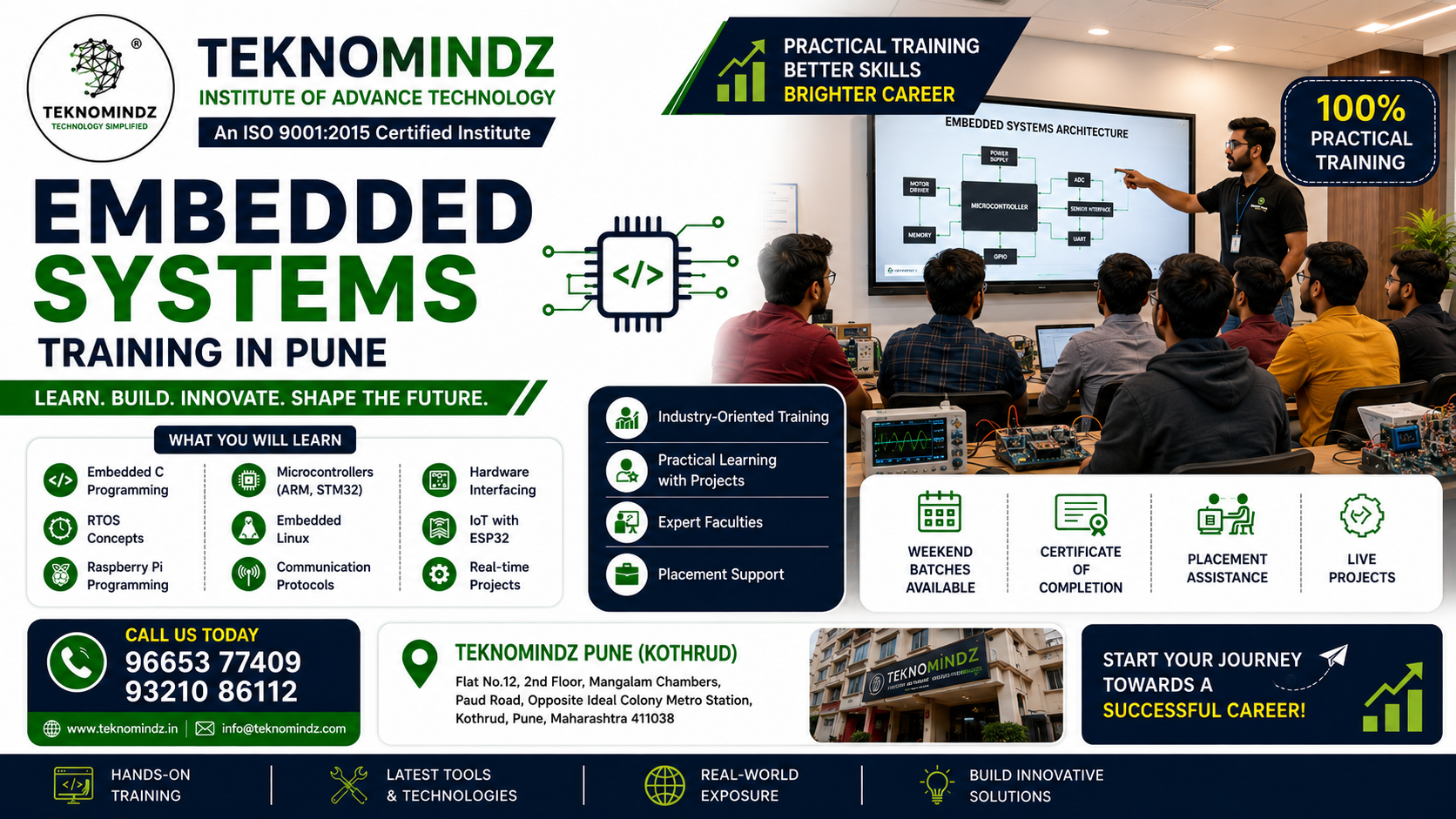
Searching for the best Embedded Systems IoT Course Training Institute in Pune? Teknomindz Institute of Advance Technology delivers top-rated industry training for Embedded Systems courses, IoT training, PCB Design Classes, Embedded Linux Course, and RTOS Training in Pune. Tailored for Engineering graduates, Diploma holders, and career seekers, our Embedded Systems classes in Pune combine real-time practical projects with expert mentorship to help you secure high-growth career opportunities.
Founded in 2019 by experienced industry professionals, Teknomindz Embedded Systems IoT, PCB Design Course Training Institute Pune delivers practical, industry-oriented training with live hardware, real-time projects, laboratory sessions, and placement-focused learning.
Our mission is to bridge the gap between academic knowledge and industry requirements by providing hands-on technical education that prepares students for modern engineering careers.
At Teknomindz, we believe practical learning is the key to becoming a successful engineer. Every course is carefully designed with industry requirements, live projects, and hands-on laboratory practice.
Our trainers and technical mentors bring years of industrial experience in Embedded Systems Development, Firmware Engineering, IoT Solutions, PCB Design, Embedded Linux, RTOS, and Electronics Product Development. Students receive personalized mentoring, practical guidance, and career support throughout their learning journey.
Our industry-oriented training programs help students gain expertise in today's most in-demand technologies used by leading electronics and embedded companies.
Teknomindz provides dedicated placement assistance through resume building, aptitude preparation, mock interviews, technical interview guidance, and career mentoring. Our students are successfully working in Embedded Systems, IoT, PCB Design, Electronics Product Development, Industrial Automation, and Automotive Electronics companies across India.
Whether you are a Diploma Student, Engineering Student, Graduate, Fresher, or Working Professional, Teknomindz provides the right platform to build industry-ready technical skills and launch a successful engineering career.
Join Teknomindz Institute of Advance Technology – Your Trusted Embedded Systems Training Institute in Pune.
Four pillars that Teknomindz Embedded Systems IoT Course Training institute delivers — real labs, expert mentors, small batches, and placement support.
Every module designed around how top engineering teams work today — with real hardware, real protocols, and real deliverables.
Individual development boards, PCs and components for every student. Hands-on learning from Day 1, zero sharing.
Maximum 8 students per batch ensures personalised mentorship and direct faculty support at all times.
Dedicated placement team with industry tie-ups across automotive, IT and electronics sectors across India.
Teknomindz Embedded Systems Course Training Institute Pune Offers Industry-oriented, hands-on training programs designed by experts with real-world practical exposure. Available in both Online & Offline modes.
A structured, outcome-first journey designed for freshers, diploma holders, and working professionals.
Talk to our advisor, share your background, and we'll recommend the best course and timing — weekday, weekend, online, or offline.
Learn by doing from Day 1. Every module includes dedicated hardware sessions with your own development board and PC — zero sharing.
Multiple real projects every module. You build, present, get feedback — simulating exactly how top engineering teams operate.
Receive your NSDC/Skill India certificate and get connected to our hiring network across automotive, healthcare, IT & electronics companies.

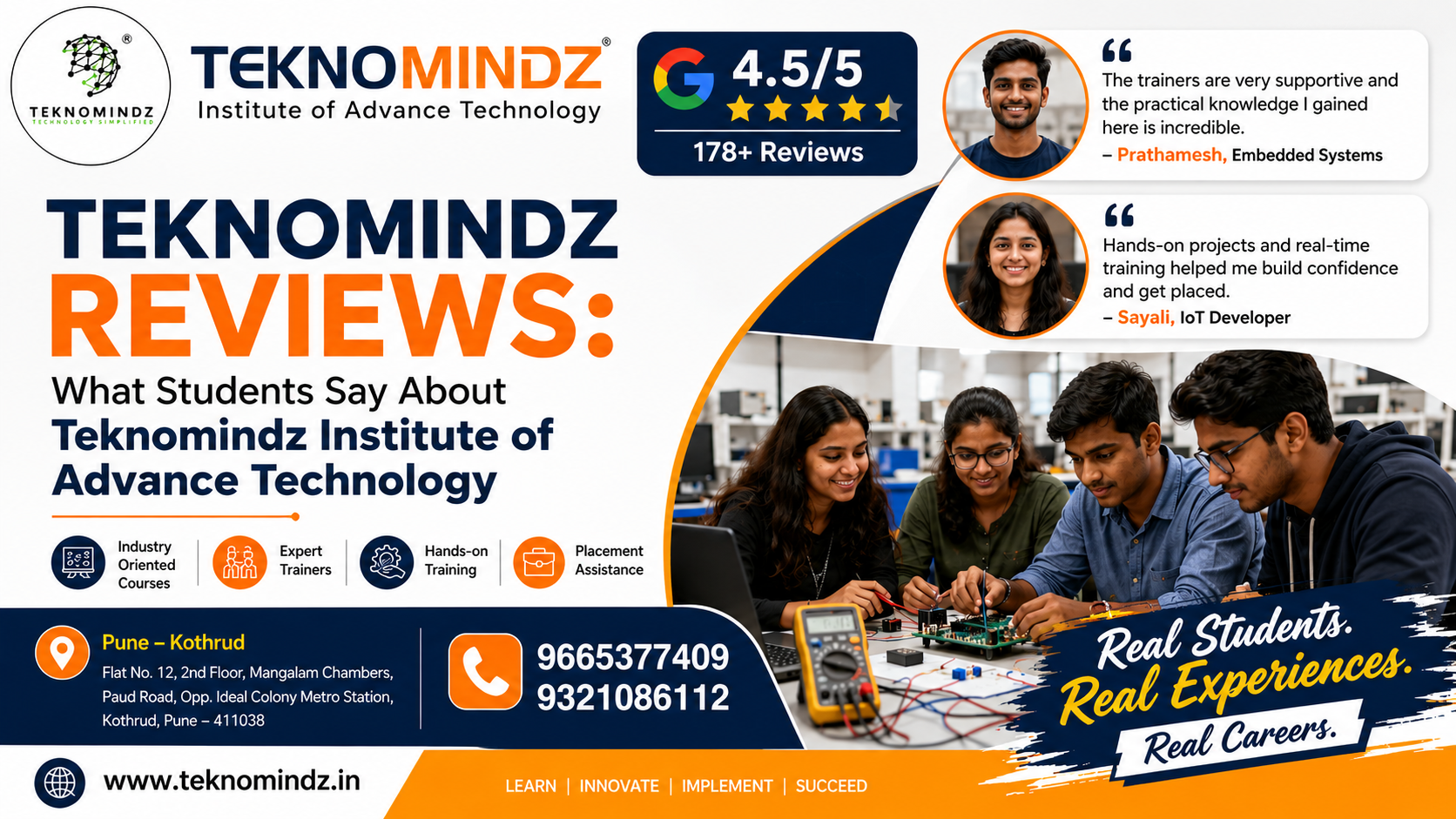
Best institute for IoT and Linux training.Trainers explain every concept practically with industry examples and live projects.
IoT Developer — Accenture
Amazing learning experience with advanced Embedded Systems and PCB Designing.Placement assistance was very supportive.
Propix Technologies — Embedded Developer
Great infrastructure with individual systems,development boards and practical sessions from the very first day.
NCR Corporation — IT Analyst
Industrial-oriented syllabus and real hardware practice made learning IoT and Embedded Systems very easy and interesting.
Embedded Engineer — ERAM Magnaflux SystemsTeknomindz students are working in leading companies across Embedded Systems, IoT, PCB Designing and IT industries.

5 to 8 months depending on weekday vs weekend batch.
Basic electronics and programming knowledge is preferred.
IoT systems, sensor interfacing, PCB prototypes and more.
Yes, placement assistance is provided with industry tie-ups.
Maximum 8 students per batch for personal attention.
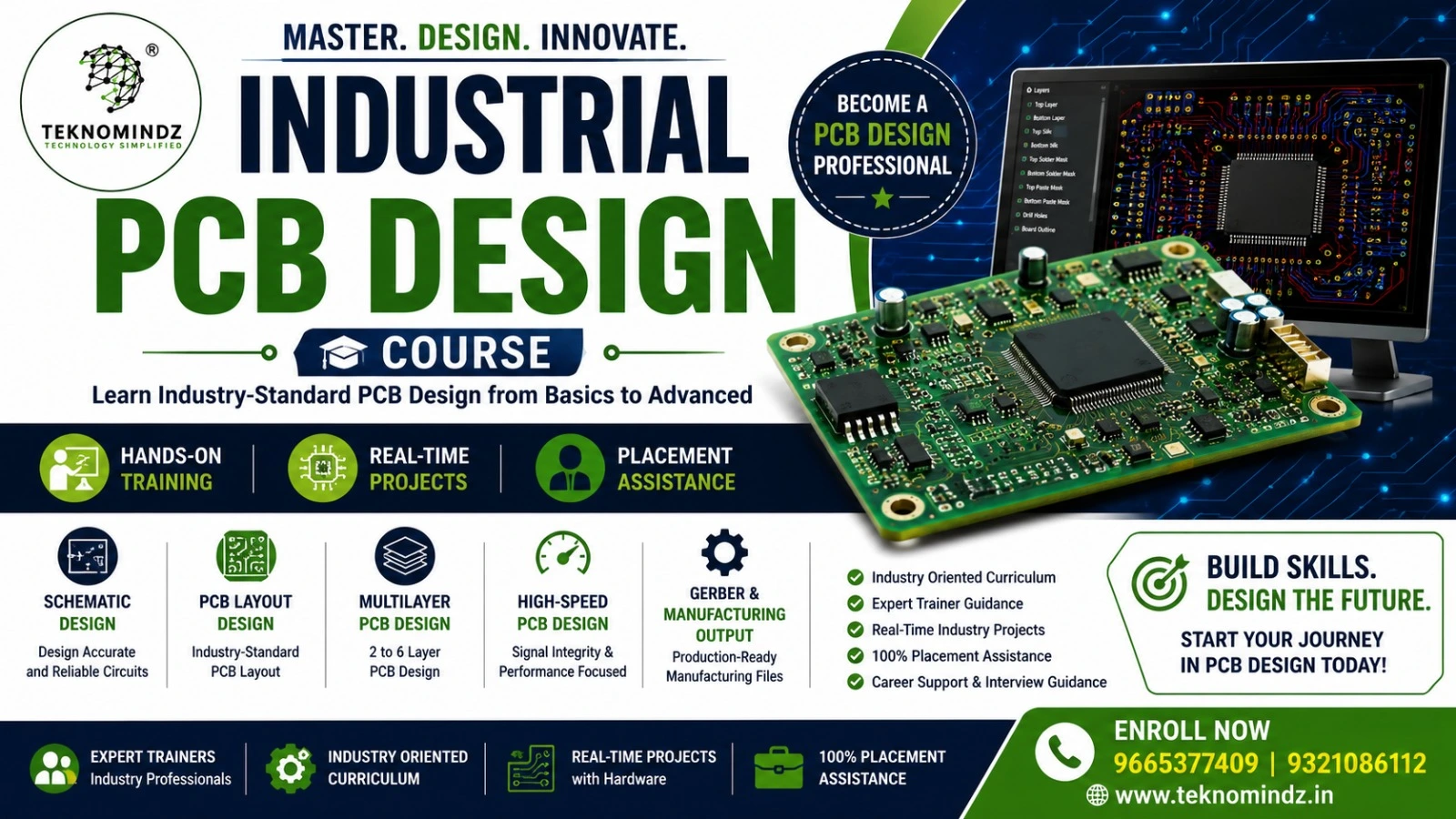
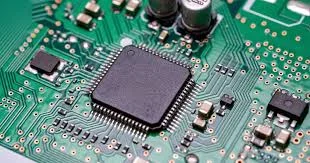
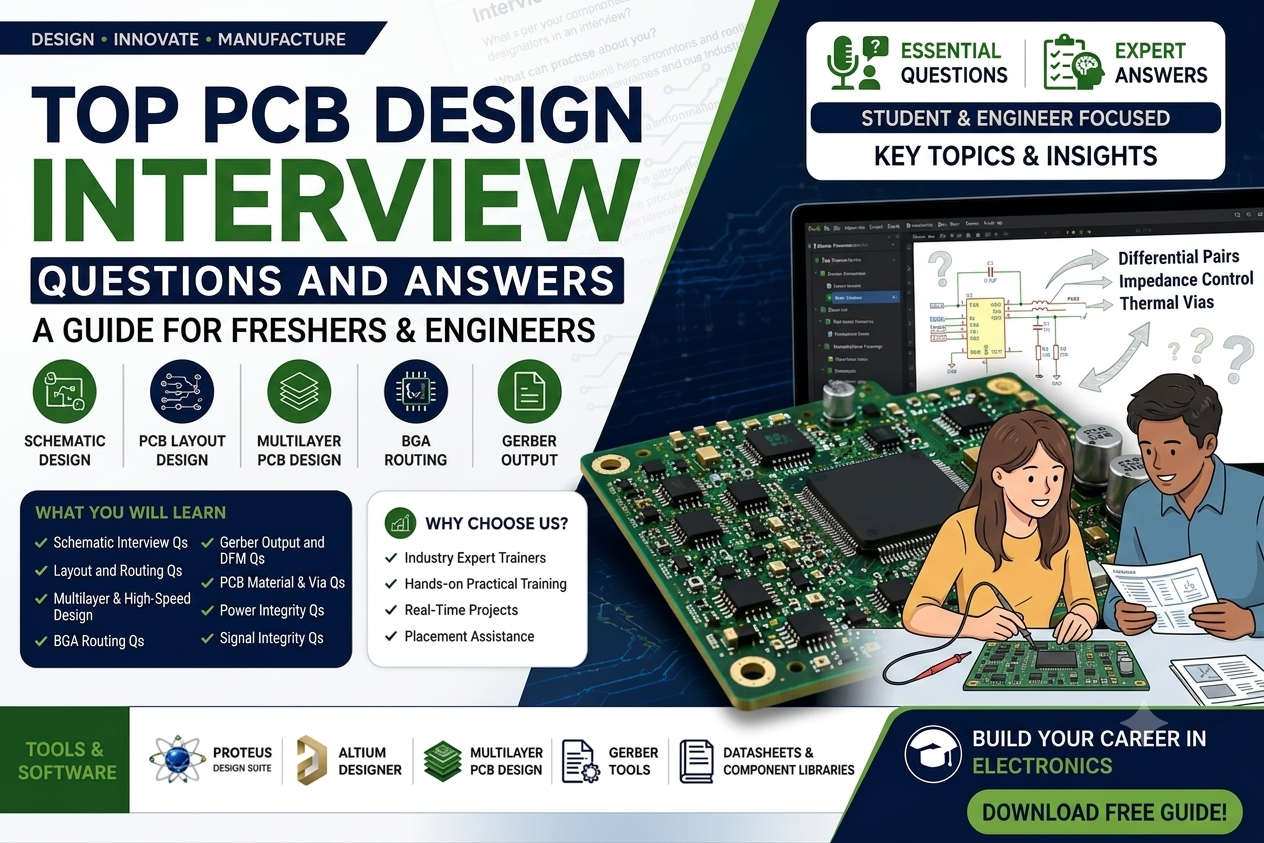
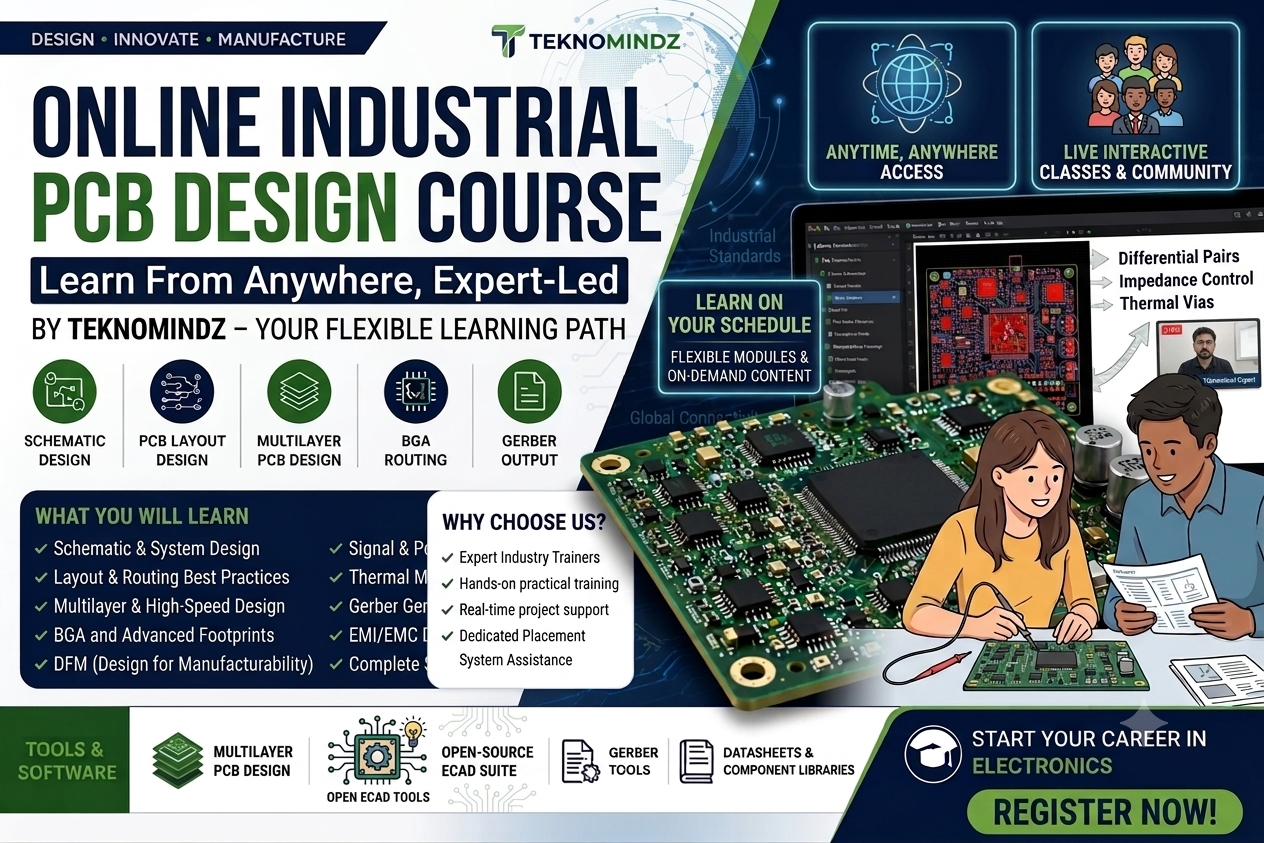
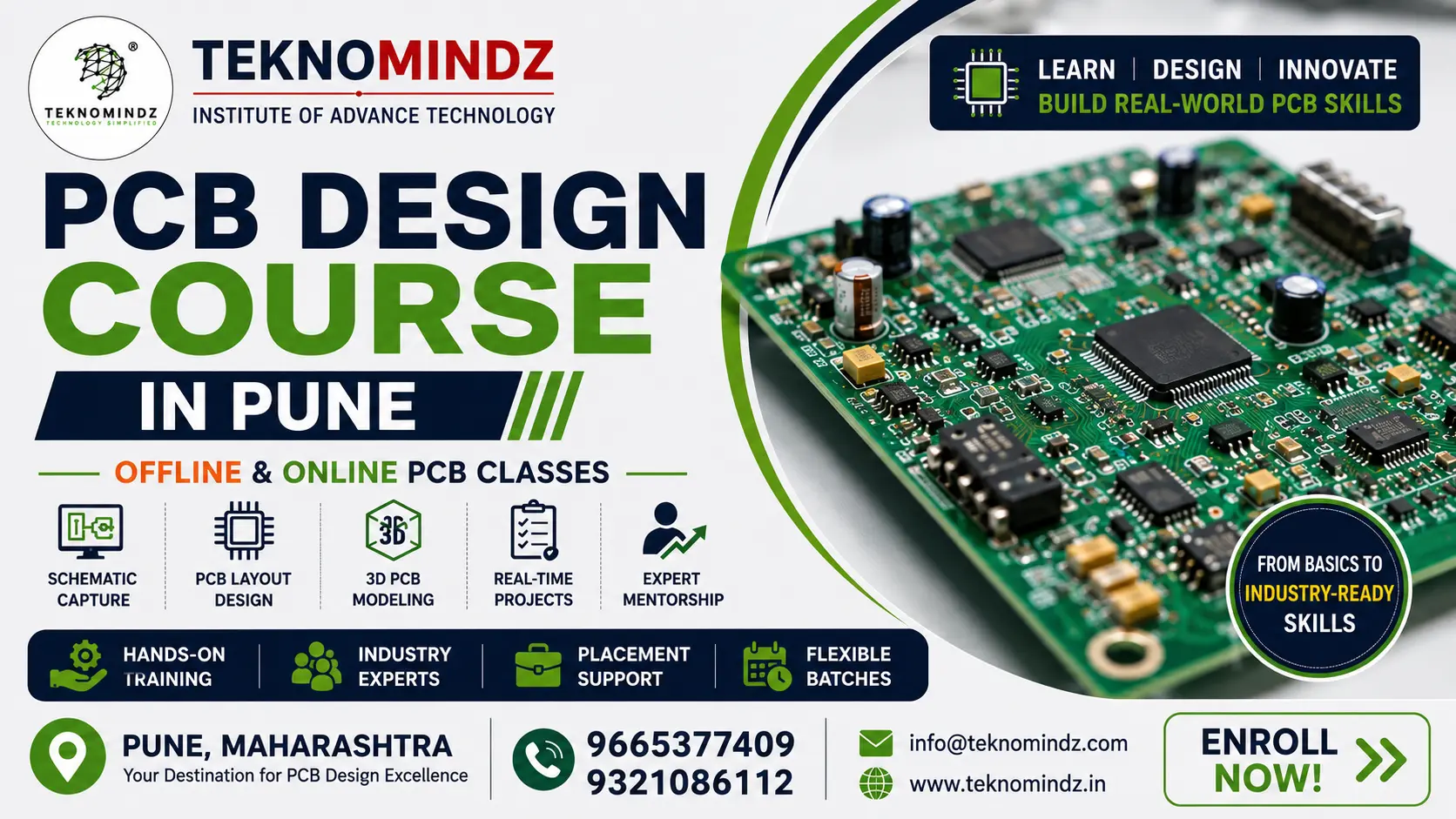
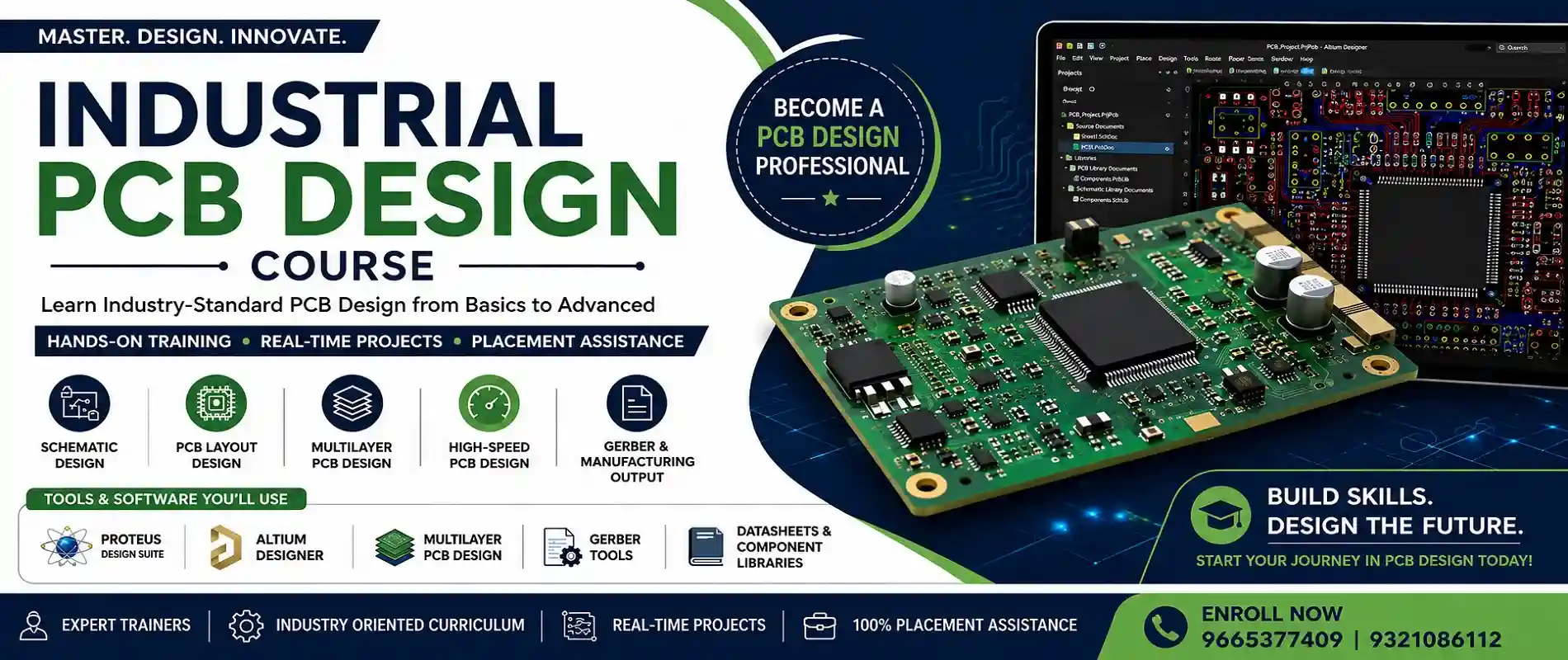
PCB (Printed Circuit Board) Design is the process of creating electronic circuit layouts that connect components and enable electronic devices to function. PCB design is essential in industries such as consumer electronics, automotive, medical devices, industrial automation, aerospace, and IoT product development.
Our PCB Design Course is suitable for:
No prior PCB design experience is required.
Students receive practical training on industry-standard PCB design tools including:
These tools are widely used by electronics companies for schematic design, PCB layout design, simulation, and manufacturing output generation.
The Diploma in Industrial PCB Design is a 3-month industry-oriented training program that combines theory, practical sessions, and real-world projects.
Yes. Teknomindz focuses heavily on hands-on learning. Students work on:
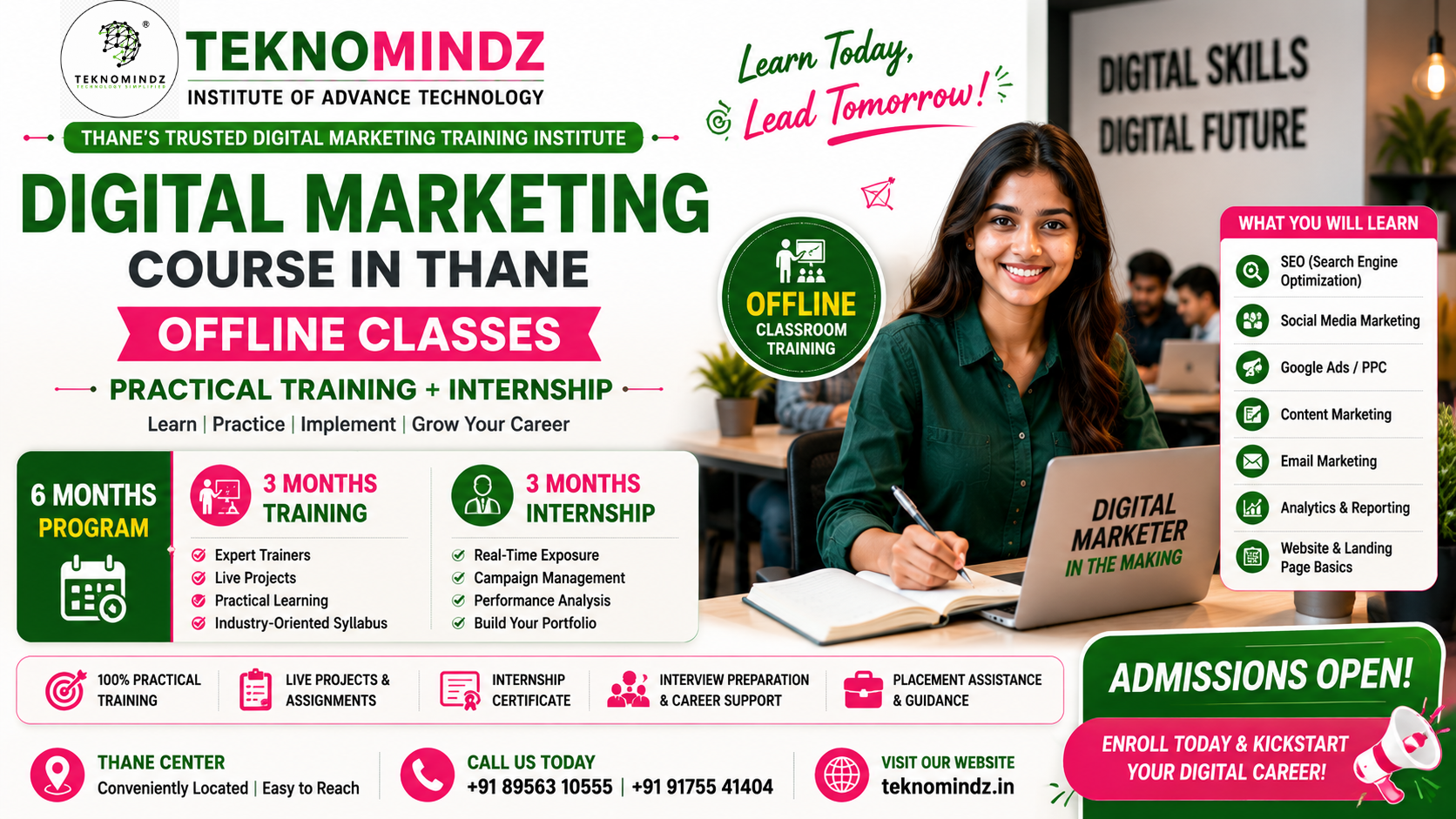
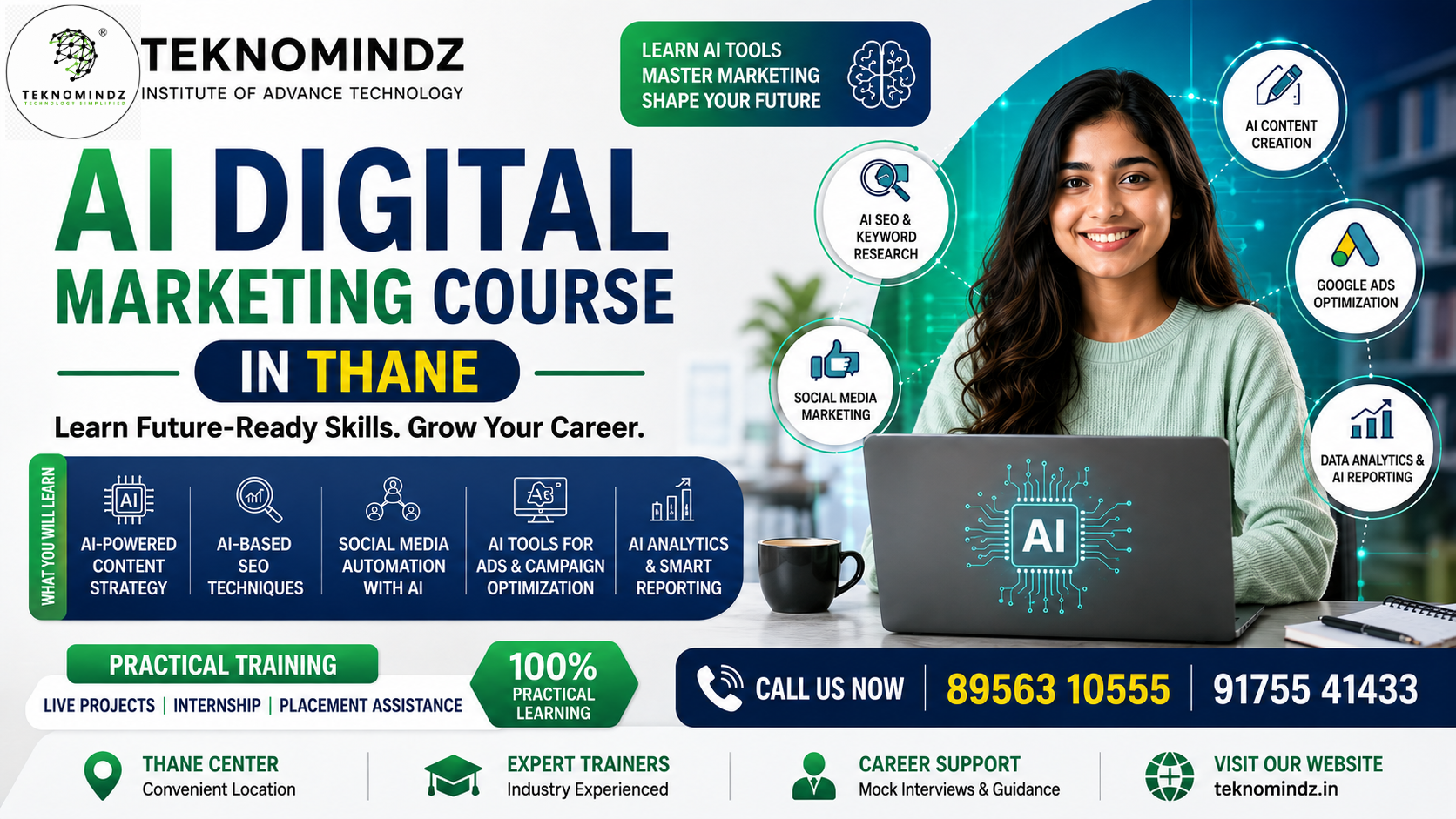
Teknomindz Institute of Advance Technology offers a comprehensive 6-month Digital Marketing Training in Thane, including 3 months of practical training and 3 months of internship. The course focuses on hands-on learning, live projects, experienced faculty, and career-oriented training.
The Digital Marketing Course is 6 months long, consisting of 3 months of classroom or online training followed by 3 months of internship to provide practical industry experience.
This course is suitable for students, freshers, working professionals, career switchers, career break candidates, homemakers, entrepreneurs, and non-IT graduates. No prior technical knowledge is required.
Yes. Teknomindz offers both classroom training in Thane and live online classes, allowing students to learn from anywhere while receiving the same practical training and expert guidance.
Yes. The course includes a 3-month internship where students work on practical digital marketing projects. Teknomindz also provides resume building, interview preparation, and career guidance to help students start their digital marketing careers.
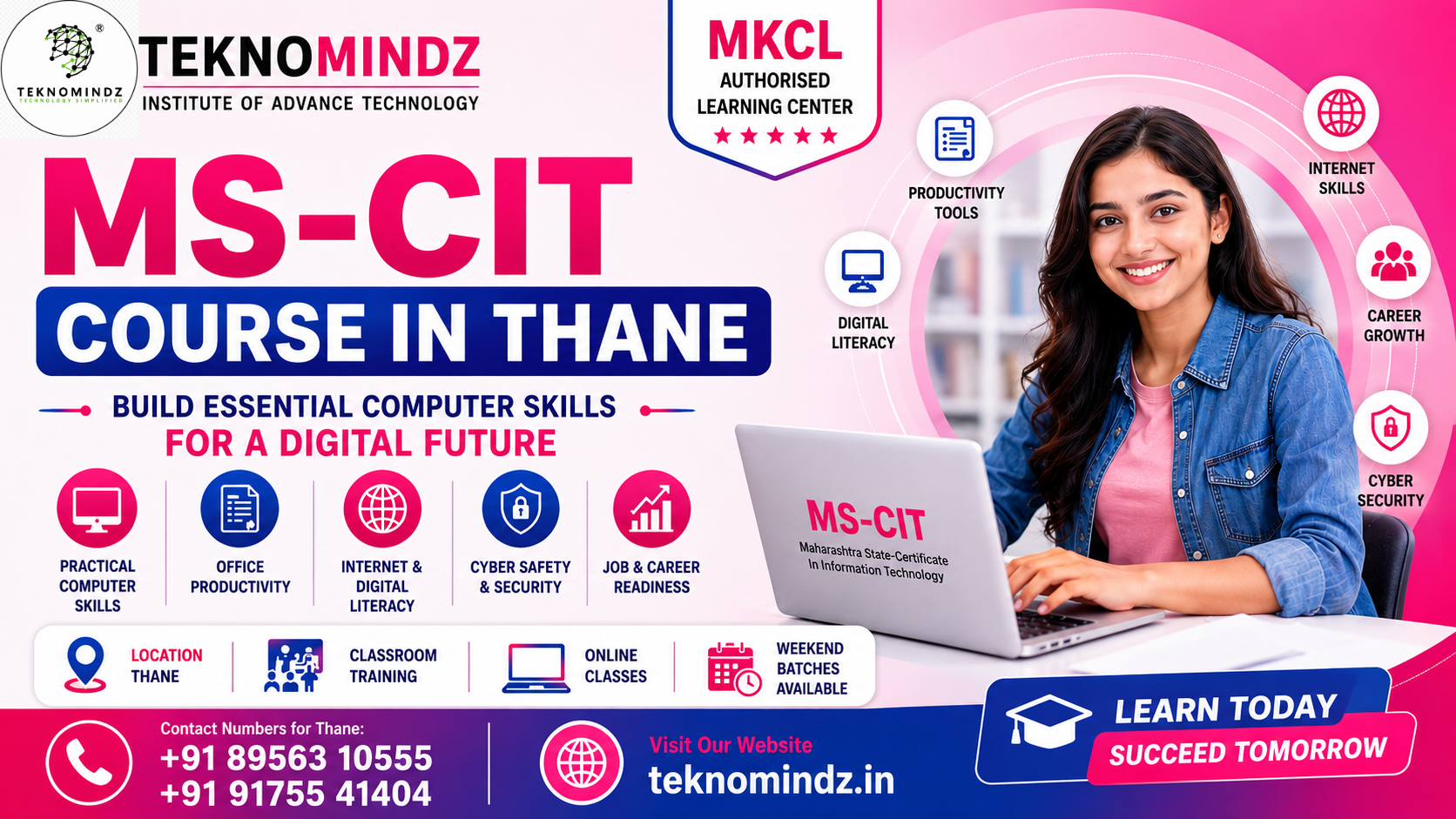
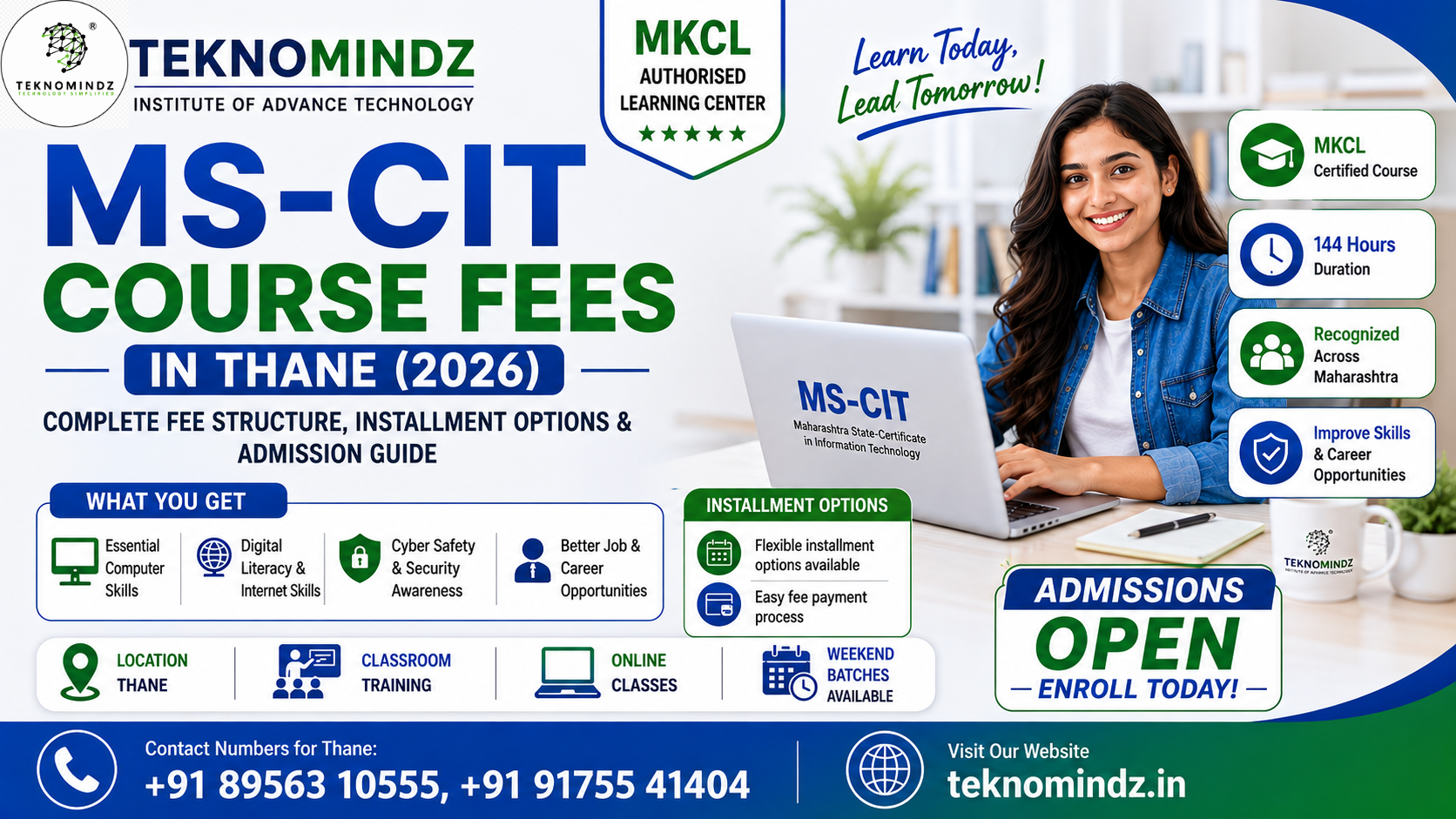
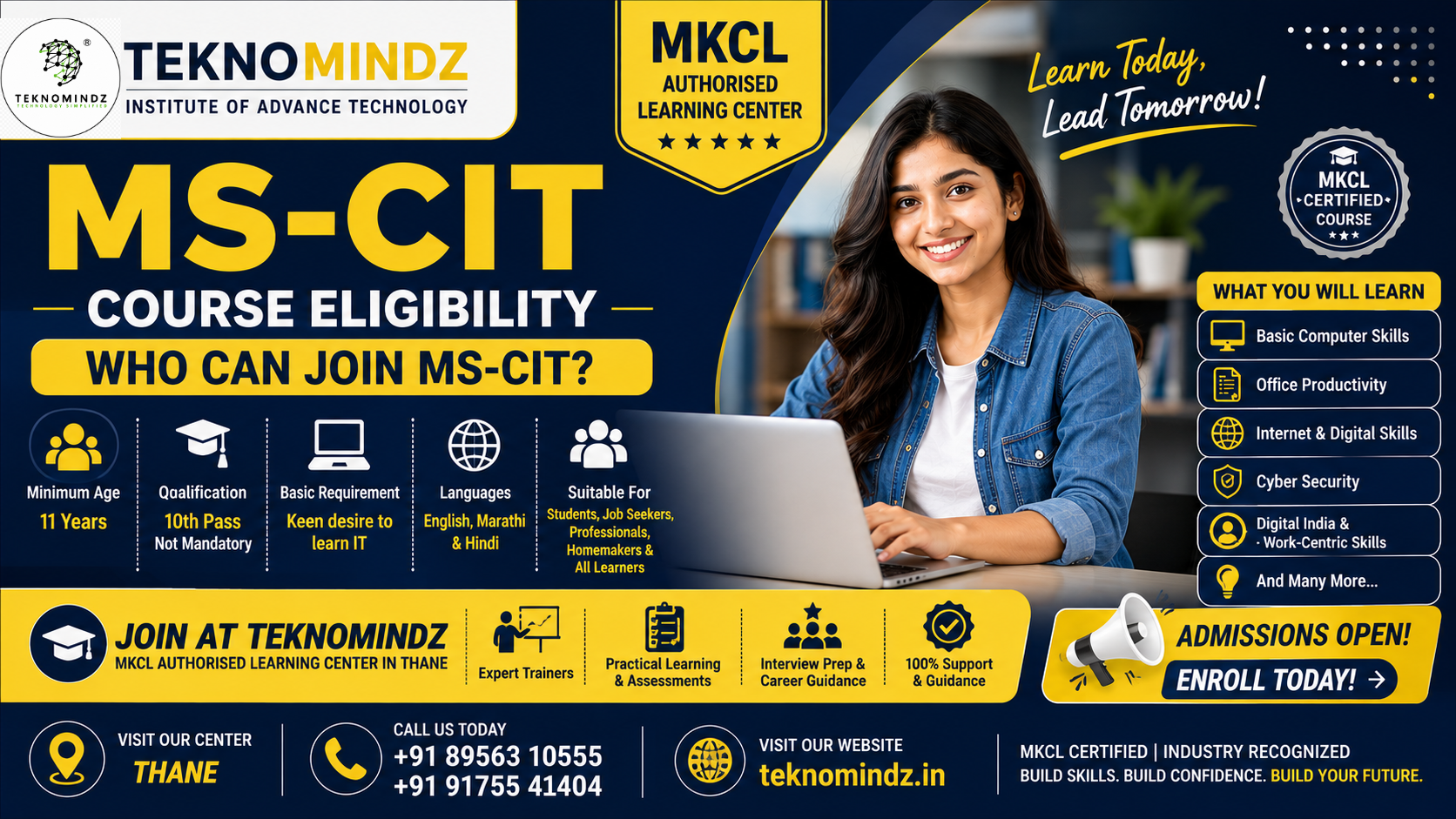
MS-CIT is a computer literacy course designed to develop practical computer and digital skills. Teknomindz offers the MS-CIT Course in Thane as an MKCL Authorized Learning Center.
Yes. Teknomindz is an MKCL Authorized Learning Center offering MS-CIT training in Thane.
Students, job seekers, working professionals, homemakers, business owners, and anyone who wants to improve their computer and digital skills can join the MS-CIT Course in Thane.
The course helps learners develop practical computer skills, digital literacy, internet usage, email communication, office productivity skills, and other essential digital skills useful for education, employment, and everyday work.
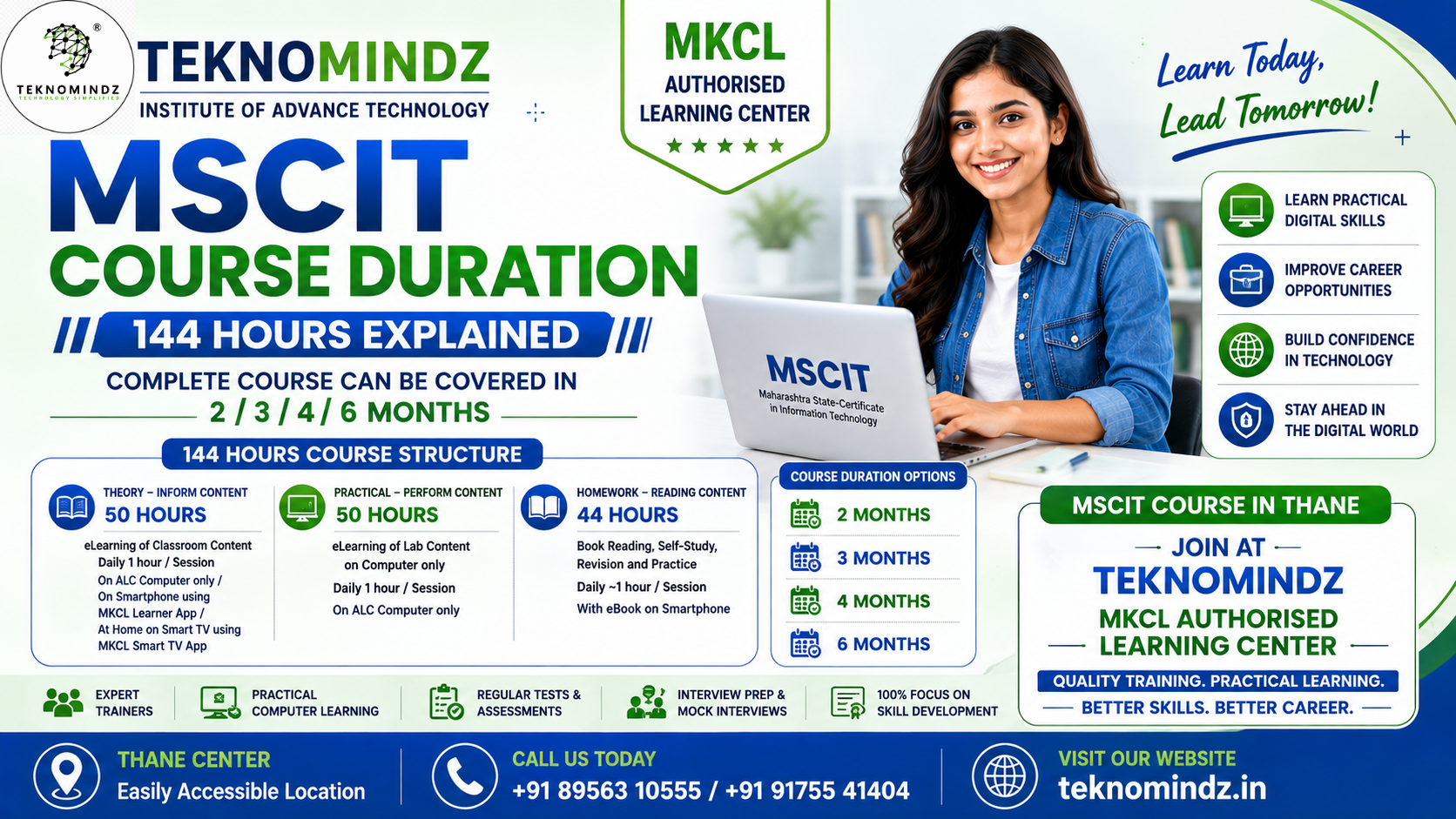
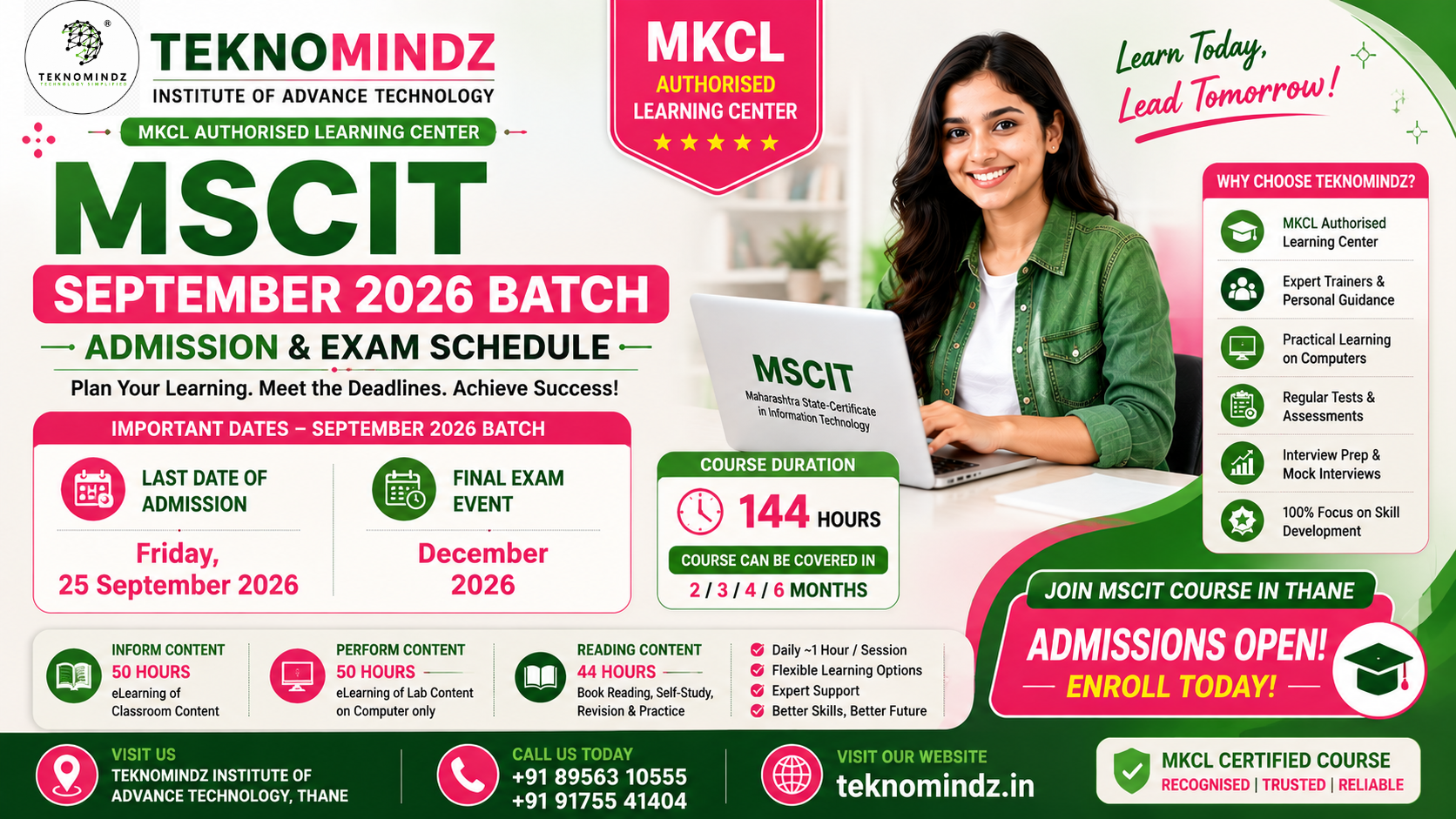
The MS-CIT Course has a structured duration of 144 hours.
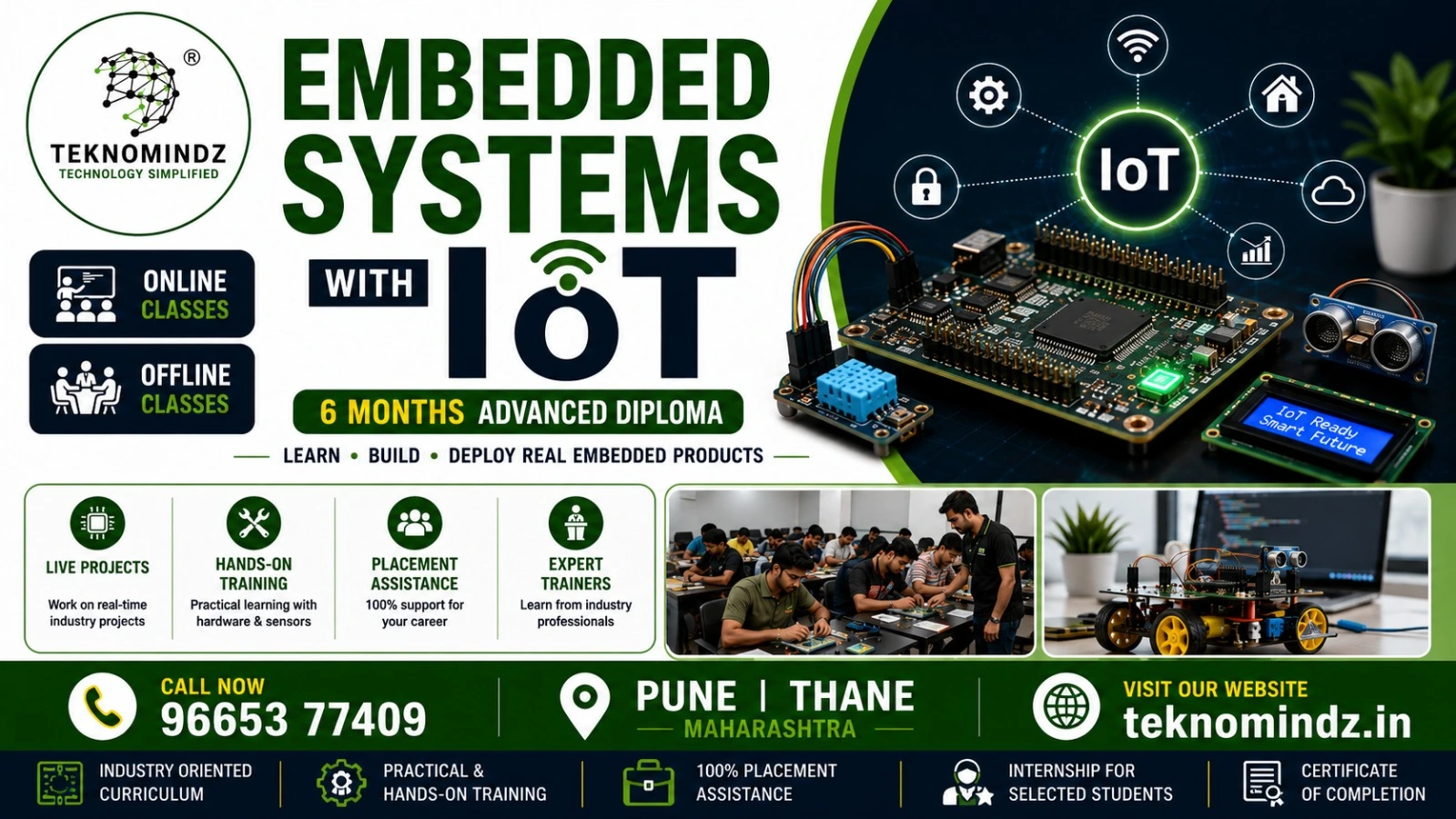
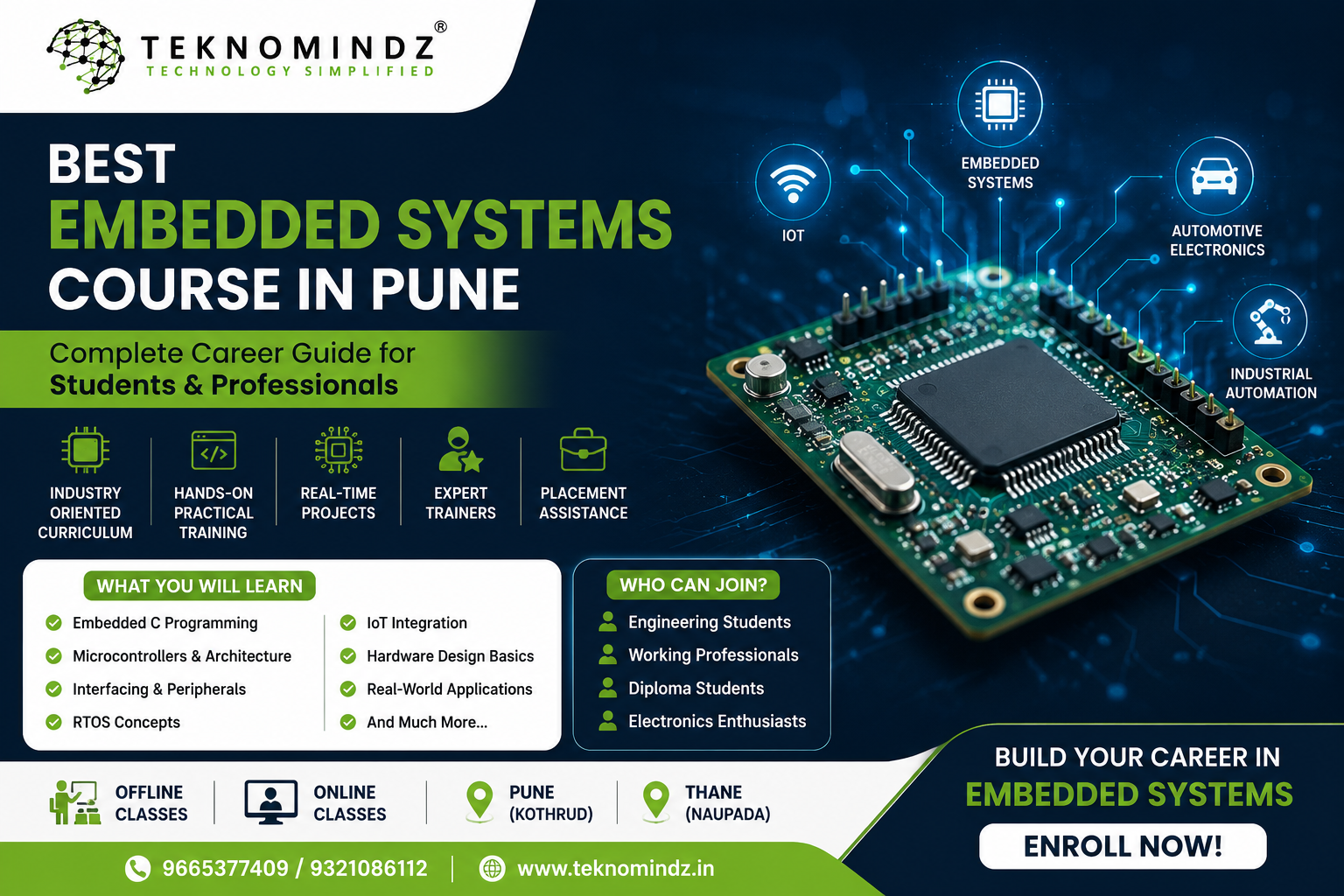
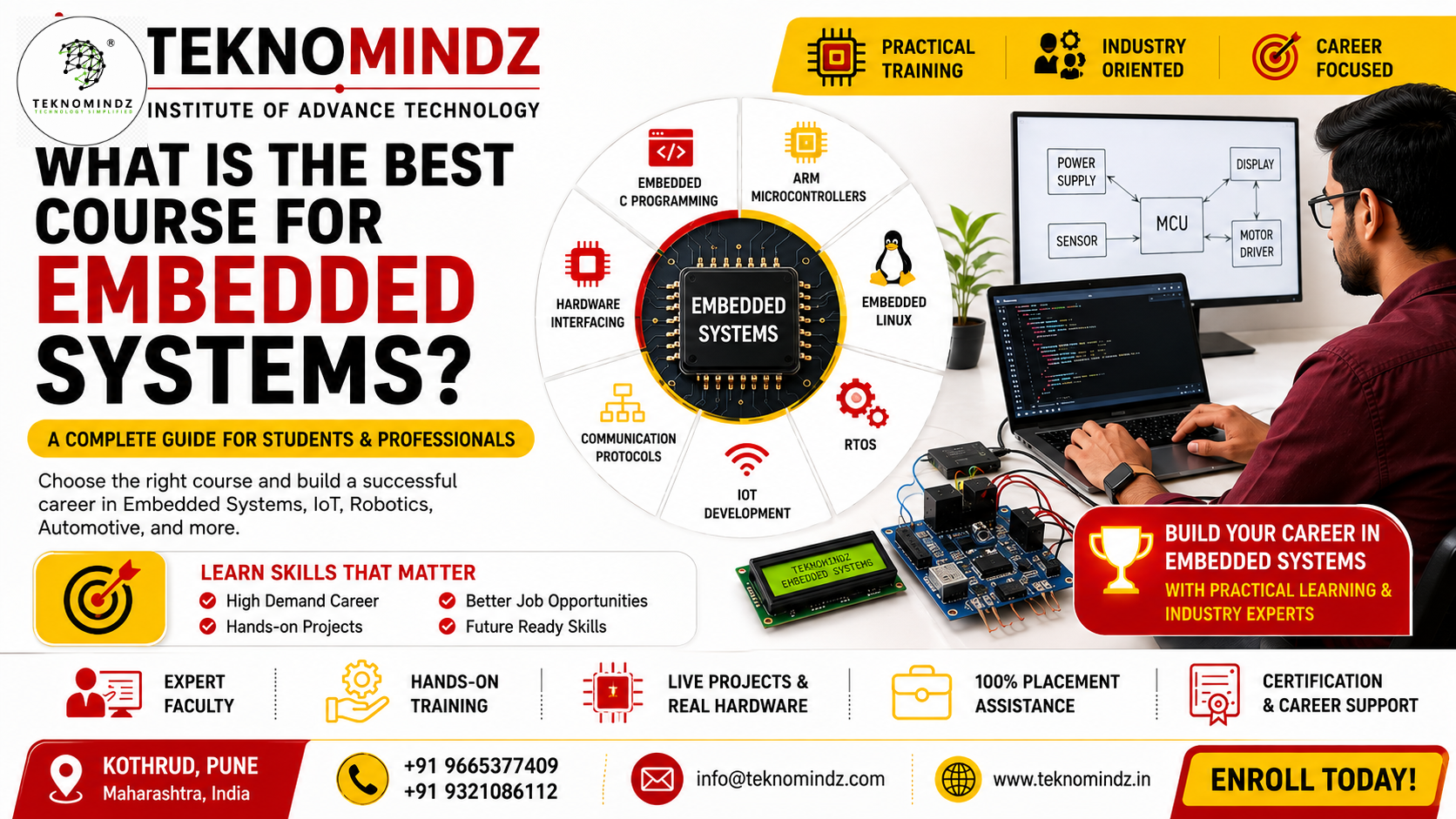
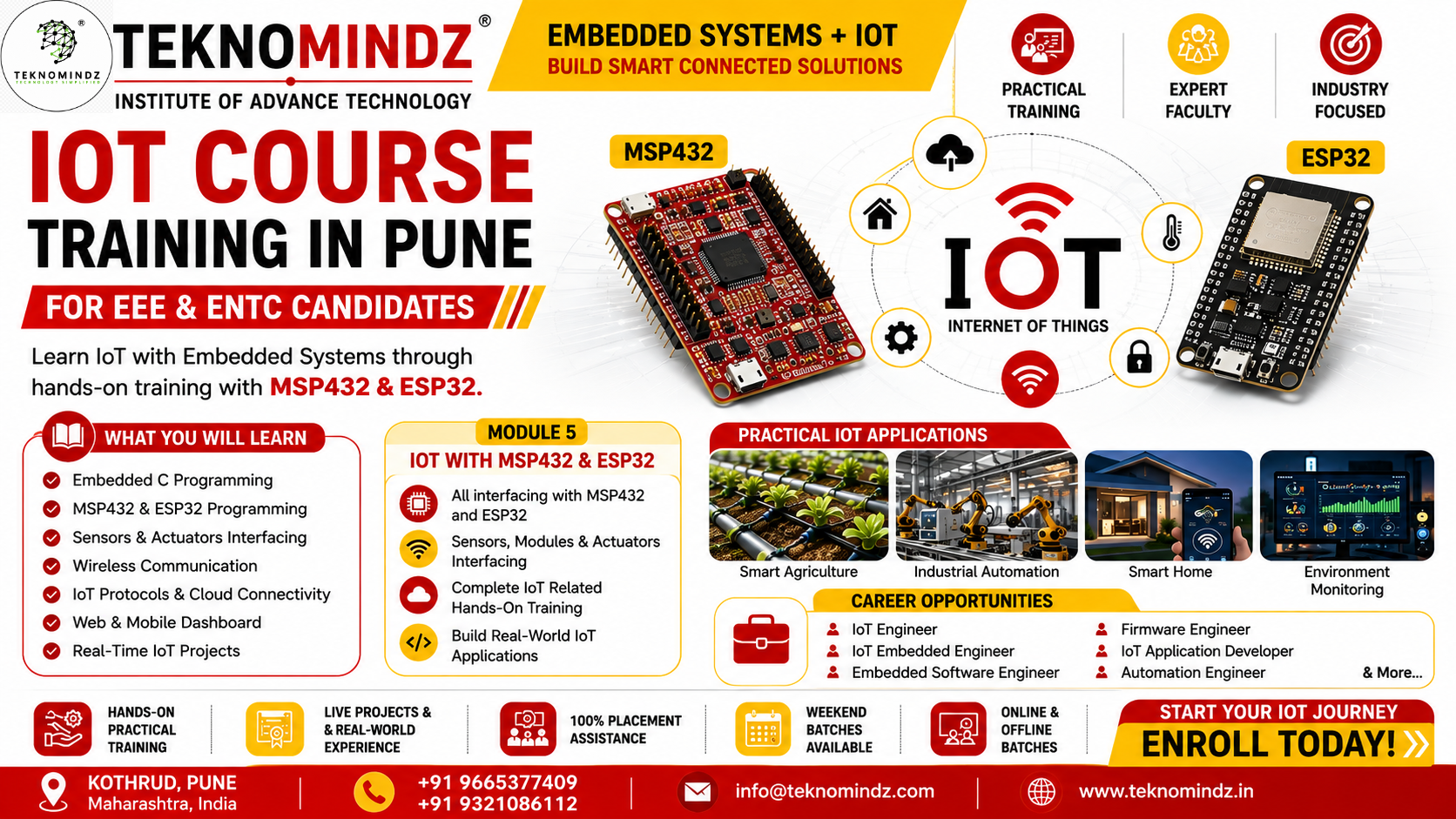
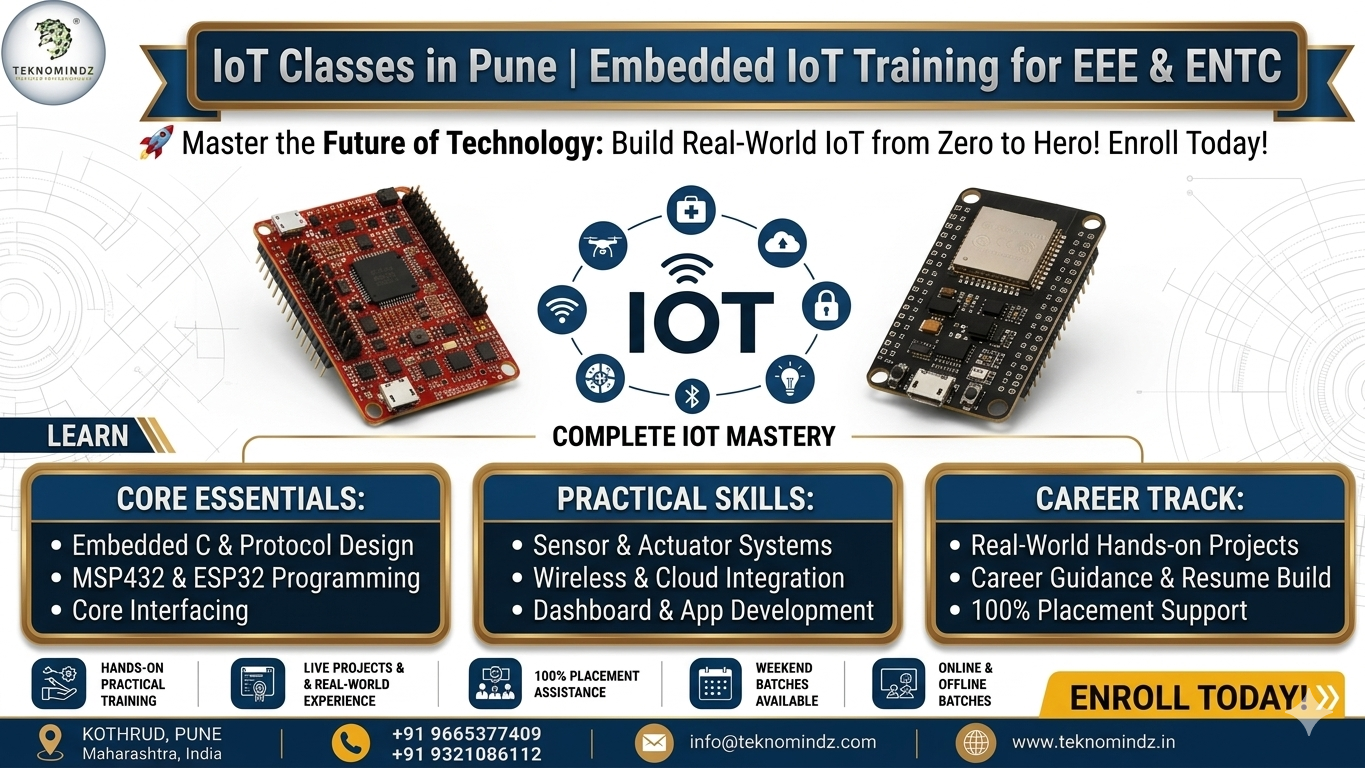
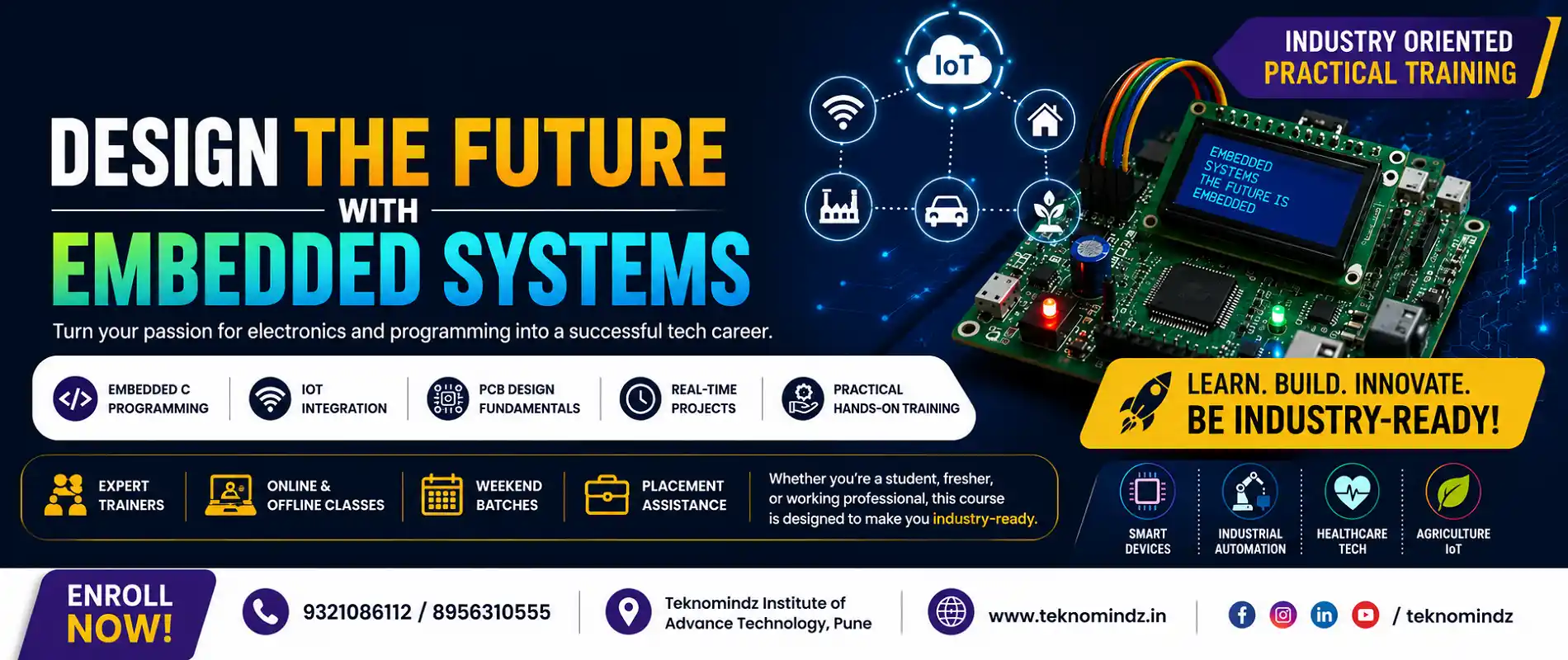
The Embedded Systems with IoT Course combines embedded programming, microcontrollers, hardware interfacing, communication protocols, firmware development and IoT technologies. The course helps students understand how electronic devices are programmed, controlled and connected to networks and cloud-based applications.
Prior programming knowledge is helpful but not mandatory. The training covers the required programming concepts and gradually progresses from fundamentals to embedded programming and real-world applications.
Yes. The course focuses on hands-on Embedded Systems training rather than theory alone. Students work with development boards, sensors, communication interfaces and embedded applications to gain practical experience.
Yes. Students work on practical projects designed to develop skills in microcontroller programming, sensor interfacing, communication protocols, IoT connectivity and embedded application development.
Yes. Teknomindz provides online and offline Embedded Systems training, allowing students to choose the learning mode that suits them.
Yes. Students learn important embedded communication protocols such as UART, SPI, I2C and CAN, along with their practical application in embedded systems.
Yes. The IoT component covers concepts related to connected devices, Wi-Fi, Bluetooth, MQTT, sensors, IoT communication and cloud connectivity, helping students understand complete Embedded Systems and IoT applications.
Teknomindz provides placement assistance, resume preparation, mock interview practice and career guidance to help students prepare for embedded systems job opportunities.
Take a glimpse into practical sessions, workshops, projects, placements, and memorable moments at Teknomindz.







Teknomindz Institute is Pune’s leading professional technical institute, helping students build industry-ready skills through practical training in Embedded Systems, PCB Designing, IoT, and Electronics Engineering.
Join 255+ successful graduates. Book a free counselling session — no commitment required.