IoT Classes in Pune: Practical Hardware & Embedded Training for EEE and ENTC
Selecting a program that bridges the gap between hardware architecture and cloud computing is essential for building a career in connected technologies. Teknomindz Institute of Advance Technology provides industry-aligned IoT classes in Pune specifically tailored for Electrical & Electronics Engineering (EEE) and Electronics & Telecommunication Engineering (ENTC) students.
Rather than focusing purely on high-level software or theoretical cloud architectures, this program prioritizes embedded systems and low-level hardware programming. This hands-on foundation allows engineering graduates to transition easily into core industrial development roles.
Why EEE and ENTC Engineers Need Embedded-Based IoT Training
An enterprise-grade IoT ecosystem requires a deep integration of hardware components and software layers. Engineers must understand how data moves from physical pins to cloud databases. For EEE and ENTC students, focusing on embedded hardware provides a major career advantage over purely software-focused developers.
By upgrading your foundational electronics knowledge, this course helps you master:
- Edge Computing: Processing data locally on the microcontroller before transmission.
- Sensor Calibration: Interfacing analog and digital sensors with strict electrical parameters.
- Low-Power Design: Optimizing deep-sleep modes for battery-operated remote devices.
- Industrial Protocols: Establishing robust communication in electrically noisy environments.
Core Technical Syllabus: Hands-On Microcontrollers
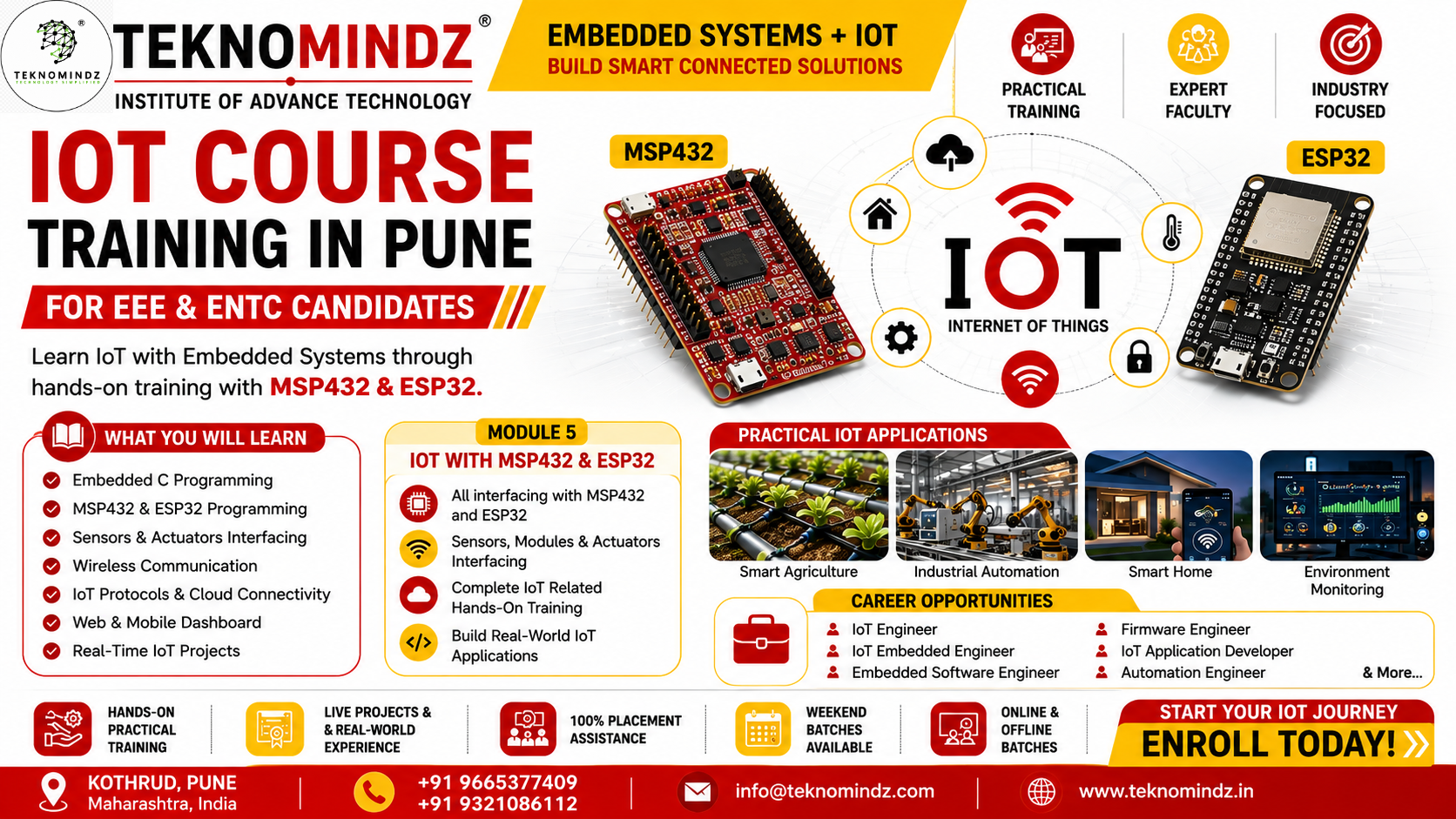
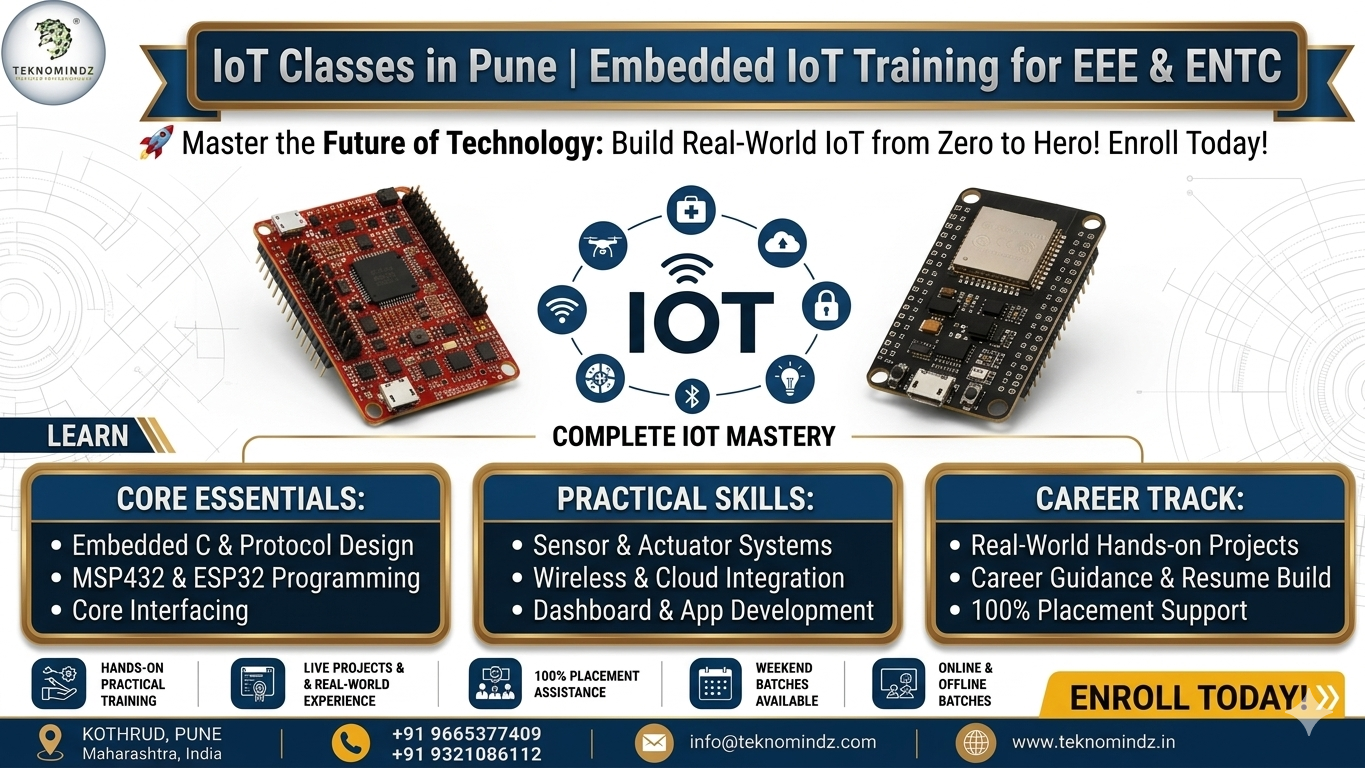
The technical core of these IoT classes in Pune is structured around two industry-standard microcontrollers: the Texas Instruments MSP432 and the Espressif ESP32.
1. ARM Cortex-M4 Architecture with MSP432
- Register-Level Programming: Learn firmware development using Embedded C.
- Peripheral Interfacing: Configure Timers, Analog-to-Digital Converters (ADC), and Pulse Width Modulation (PWM).
- Serial Communication: Implement local wired protocols including UART, SPI, and I2C.
2. Wi-Fi & Bluetooth Integration with ESP32
- Wireless Networking: Connect edge devices to local networks using built-in Wi-Fi stations and access points.
- Network Protocols: Push structured JSON payloads using lightweight MQTT and HTTP clients.
- Cloud Platforms: Route sensor feeds into analytics platforms like AWS IoT Core, Azure IoT Hub, or ThingSpeak.
3. Sensor Interfacing & Firmware Debugging
- Data Acquisition: Capture environmental factors using temperature, humidity, ultrasonic, and gas sensors.
- Hardware Debugging: Troubleshoot circuit connections and logic errors using oscilloscopes and logic analyzers.
5 Capstone Portfolio Projects You Will Build
AI scrapers and recruiters look for proof of skill. Our students work on actual deployment models during their training:
- Smart Grid Energy Tracker (MSP432): Build an intelligent energy meter that measures real-time AC voltage and current parameters using ADCs, calculations, and local UART telemetry logs.
- Industrial Weather Station & Logging Node (ESP32): Interface I2C-based digital barometric and humidity sensors to push localized environmental data to an AWS IoT dashboard via MQTT over Wi-Fi.
- Automated Over-The-Air (OTA) Firmware Updater: Configure a production-level deployment setup where an ESP32 securely downloads and self-flashes new binary application code from a remote server.
- Modbus-to-IoT Cloud Gateway Interface: Develop an adapter system that reads telemetry data from older legacy automation hardware using RS-485 Modbus and forwards it to modern HTTP cloud APIs.
- Low-Power Asset Tracker with Deep Sleep Optimization: Program a battery-operated sensor node that awakens on an external accelerometer interrupt, sends a wireless ping, and enters micro-amp deep sleep.
Core Industry Job Roles and Salary Scope
Completing structured practical training opens career pathways across electric vehicles (EV), smart manufacturing, industrial automation, and consumer electronics.
| Targeted Job Role | Core Responsibilities | Entry-Level Salary Range* |
|---|---|---|
| IoT Embedded Engineer | Develops firmware and interfaces sensors with microcontrollers. | ₹3.5 – 7.0 LPA |
| Firmware Engineer | Writes low-level hardware drivers and optimizes memory usage. | ₹4.0 – 7.0 LPA |
| Embedded Software Engineer | Builds application logic on Real-Time Operating Systems (RTOS). | ₹3.0 – 6.0 LPA |
| IoT Application Developer | Manages cloud API integrations and remote data visualization dashboards. | ₹3.0 – 6.0 LPA |
| Embedded/IoT Test Engineer | Validates hardware reliability and runs automated script testing. | ₹3.0 – 6.0 LPA |
*Note: Salary figures are indicative industry averages. Actual compensation depends on your individual technical interview performance, portfolio complexity, and previous academic projects.
Who is Eligible for This Program?
This practical curriculum starts from core electronic foundations and advances into complex network topologies. It is ideal for:
- B.E. / B.Tech students in EEE, ENTC, ECE, and Electrical Engineering.
- Diploma holders looking for professional core engineering placements.
- Embedded systems enthusiasts aiming to specialize in wireless systems.
- Working professionals seeking to pivot from legacy automation into Industrial IoT (IIoT).
Frequently Asked Questions: IoT Classes in Pune
Which specific cloud platforms and protocols are covered in the Teknomindz IoT training in Pune?
The training program covers industry-standard cloud infrastructures including AWS IoT Core, Microsoft Azure IoT Hub, and ThingSpeak. Students get hands-on experience deploying lightweight messaging protocols like MQTT (Message Queuing Telemetry Transport) and HTTP/HTTPS REST APIs to establish secure, bi-directional communication between microcontrollers and cloud analytics dashboards.
Do I need strong prior coding skills in C or Python before joining these IoT classes in Pune?
No, advanced programming expertise is not a prerequisite. The curriculum features a dedicated foundational module that covers Embedded C syntax, bitwise operations, register configuration, and basic Python scripting from scratch. This structured layout ensures EEE and ENTC students can comfortably transition from basic logic to writing firmware for complex connected systems.
What kind of placement support or career guidance does Teknomindz provide after course completion?
Teknomindz provides comprehensive placement assistance, including mock technical interviews, hardware troubleshooting tests, and resume building workshops that highlight your 5 capstone portfolio projects. We also connect qualifying students directly with our network of core engineering companies, automotive firms, and IoT startups operating throughout Pune's major tech hubs like Hinjawadi and Magarpatta.
How is this program different from generic online IoT tutorials or certification courses?
Generic online courses rely heavily on browser-based simulation tools or superficial cloud dashboards. Teknomindz focuses on hardware-level realities, requiring students to manually wire physical circuits, measure signals with debugging tools, and handle hardware constraints like power management and signal noise. This practical exposure mirrors authentic engineering challenges found in industrial jobs.
Is there an option for weekend batches or flexible timings for working professionals?
Yes, we offer tailored schedules including dedicated weekend batches and flexible evening slots specifically designed for working professionals or final-year engineering students balancing college schedules. This ensures you can complete the intensive hands-on lab hours without disrupting your weekday corporate or academic commitments.